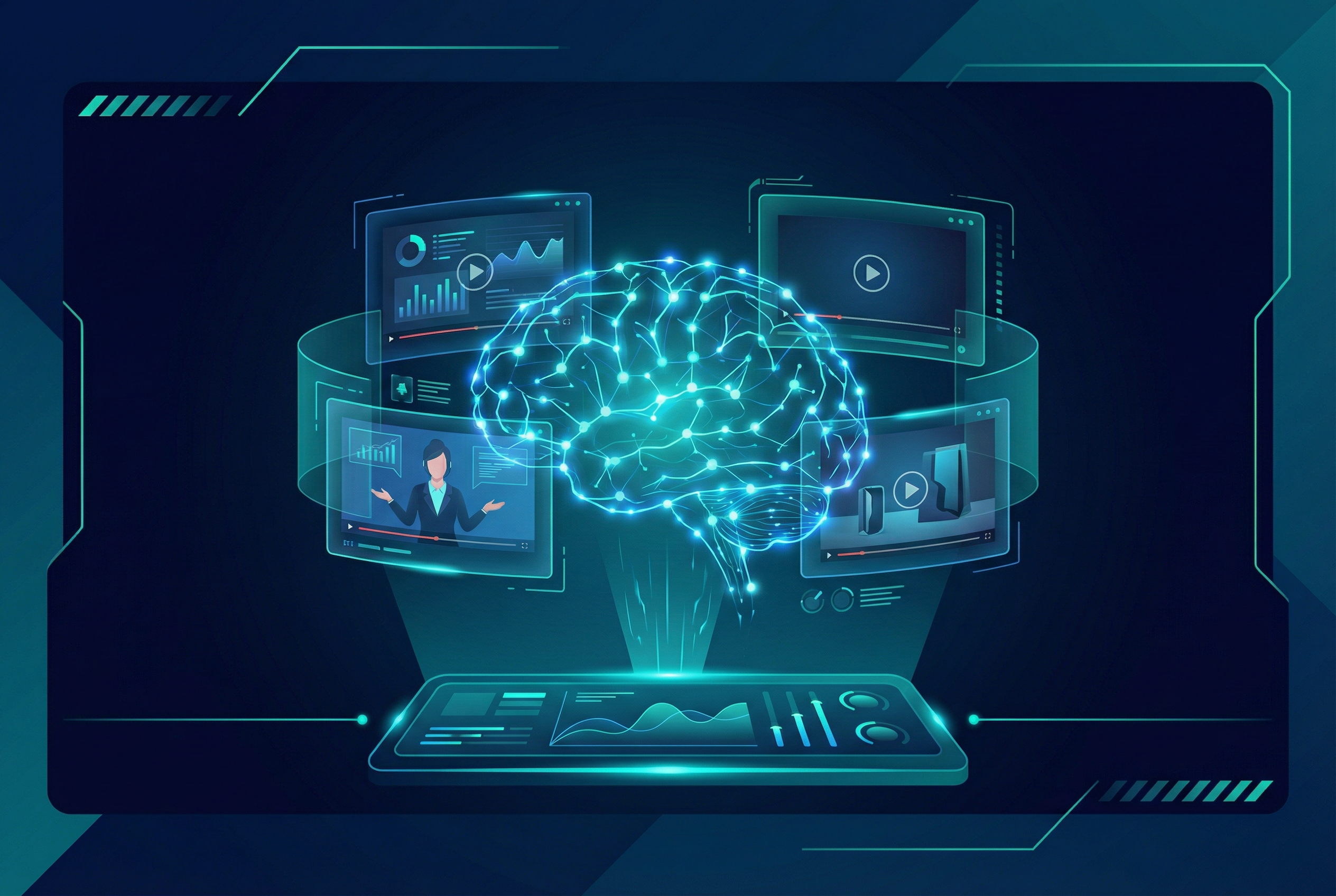
The marketing asset library looks very different this year. For over a decade, PDFs, static landing pages, and slide decks powered B2B campaigns. However, AI video marketing 2026 tools are now replacing them at scale. As a result, the data behind this shift is impossible to ignore.
In fact, AI-powered video marketing has moved from experiment to standard practice. Brands that adopted AI video tools early now produce more content, reach wider audiences, and collect richer engagement data. Consequently, the static era is ending fast.
According to Wyzowl’s 2026 State of Video Marketing report, 91% of businesses now use video as a marketing tool. Yet here is the key finding. 68% of marketers who adopted AI video tools in 2025 produced three times more content without adding headcount.
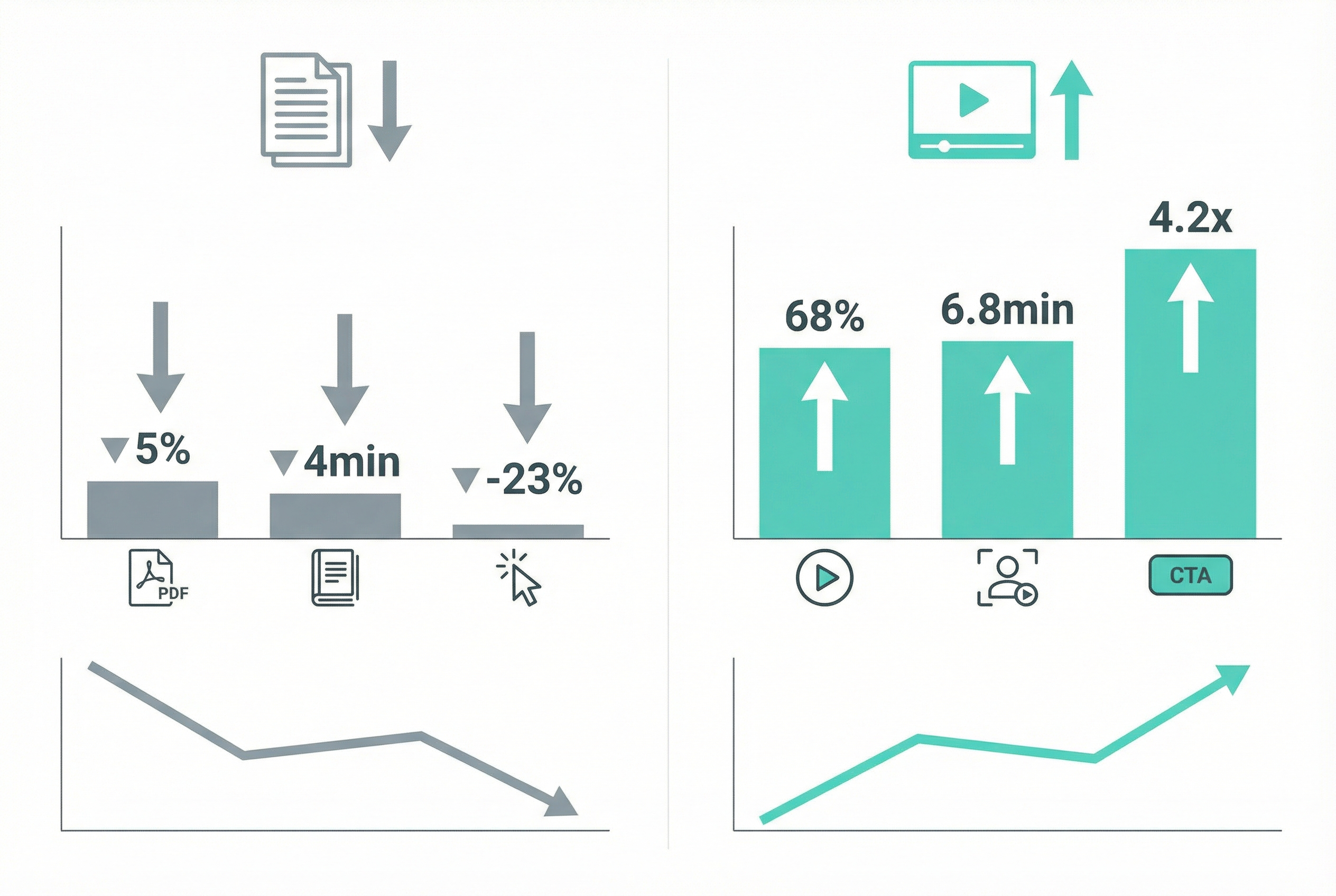
Meanwhile, static content metrics are declining across the board:
Now compare those numbers to interactive video:
In other words, the gap is not incremental. It is structural. As a result, automated video marketing has created a new performance baseline.
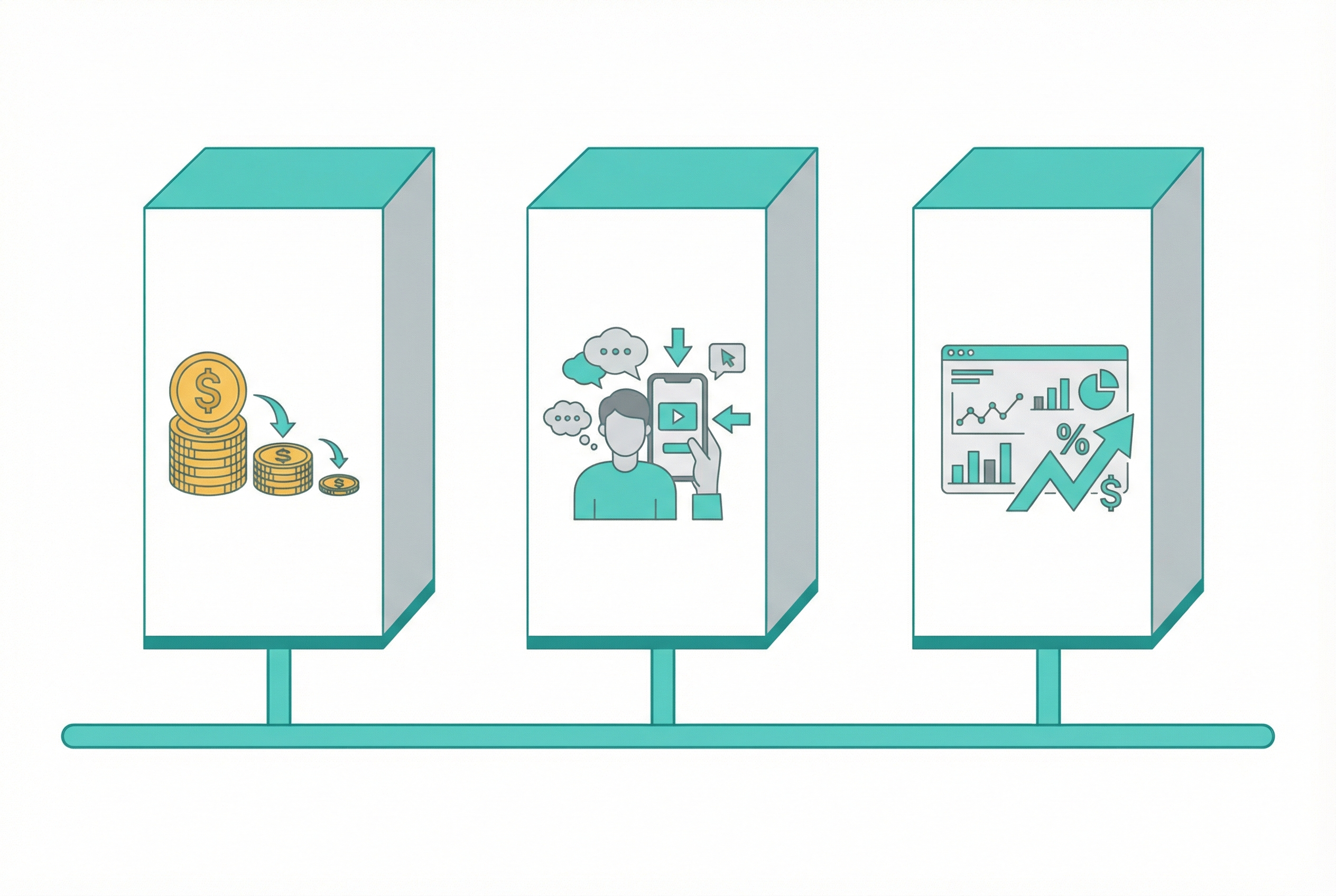
Back in 2023, one polished marketing video cost $3,000 to $15,000. On top of that, it took two to four weeks. Today, AI-powered video marketing platforms generate broadcast-quality video from a document in under ten minutes.
Of course, this does not replace creative teams. Instead, it removes the bottleneck between “we need a video” and “we have a video.” As a result, teams focus on strategy while AI handles production.
B2B buyers have changed permanently. Specifically, millennials and Gen Z now hold senior decision-making roles. Because of this, they expect visual, interactive experiences. While a 40-page whitepaper feels like homework, a seven-minute interactive video feels like a product demo.
Furthermore, Think with Google research confirms that video-first content drives higher recall and stronger purchase intent. In short, artificial intelligence video content meets buyers where they already spend their attention.
Static assets are measurement black holes. Sure, you know someone downloaded the PDF. But there is no way to tell which page they read. Likewise, attributing pipeline influence remains nearly impossible.
However, AI video tools change this completely. With these platforms, you get:
Therefore, video becomes more than a content format. In fact, it becomes an intent signal layer for demand generation teams.
So what exactly is being transformed? Let us get specific.
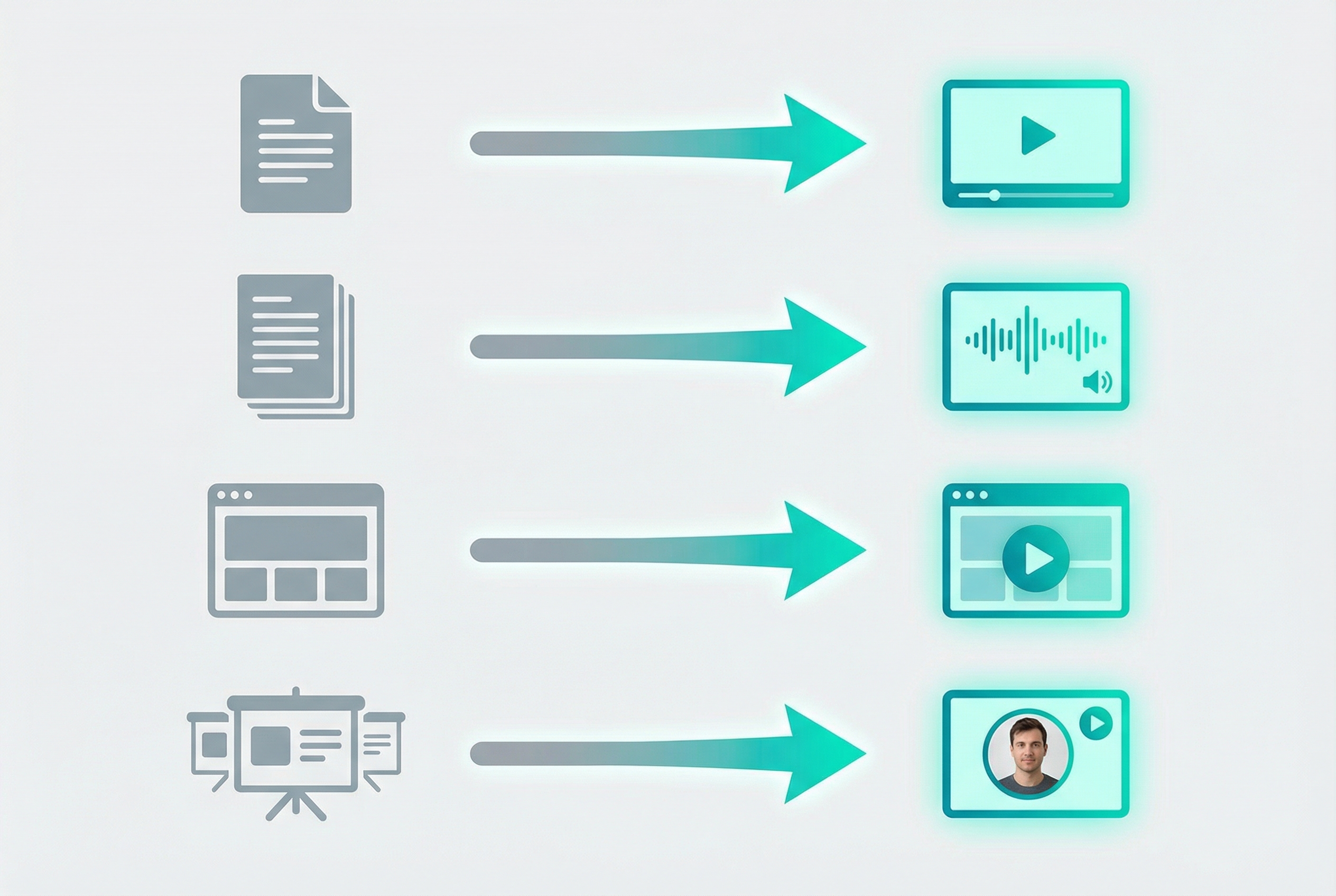
Instead of a PDF with screenshots, prospects now get a narrated walkthrough. From there, they click into feature deep-dives or chat with a bot. In other words, everything happens inside the video — no tabs, no friction.
Although the research stays the same, viewers experience it as chapter-based video. For example, animated charts replace static graphs. Additionally, gated sections capture leads mid-experience while preserving depth.
Similarly, static hero images and form fills are losing ground. Early adopters report 34% higher conversion rates on video-first landing pages. HubSpot data supports this shift across B2B segments.
Meanwhile, the generic 15-slide deck is fading. Automated video marketing tools now generate pitches customized per prospect. As a result, each video pulls in relevant case studies and feels personal at scale.
Does AI-generated video still look artificial? In 2024, often yes. However, in 2026 the quality gap has narrowed dramatically. Notably, top AI video tools produce content that is polished, brand-consistent, and difficult to distinguish from studio work.
But here is the more important point. A video that exists and reaches your audience always beats a perfect PDF sitting in Google Drive. After all, speed and reach win in content marketing — and AI-powered video marketing delivers both.
Fortunately, you do not need to overhaul everything at once. Instead, here is the highest-ROI path:
Libertify makes step two nearly instant. Simply upload a PDF or document. Within minutes, the AI generates an interactive video with animations, chapter navigation, chatbot, and full analytics.
Ultimately, the shift to AI video marketing in 2026 is not about adding another format to the mix. Rather, it is about upgrading the default asset type for every campaign.
In essence, static is becoming the exception while interactive video becomes the baseline. Forrester predicts that interactive content will dominate B2B campaign assets by 2027. Similarly, the Content Marketing Institute echoes this trend in its latest research.
Moreover, teams that adopt automated video marketing first gain three key advantages:
That advantage compounds with every asset you convert. So the sooner you start, the wider the gap grows.
Download our free comparison guide — static vs. interactive video performance.