
—
0:00
ESMA MiCA Transfer Services Guidelines 2025: Complete Compliance Guide
Table of Contents
- MiCA Transfer Services Guidelines: What Crypto-Asset Providers Must Know
- Scope and Application of the ESMA Crypto Transfer Guidelines
- Client Disclosure Requirements: MiCA Transfer Service Information
- Pre-Transfer and Post-Transfer Information Under MiCA
- Execution Times and Cut-Off Rules for Crypto Transfers
- Transfer Rejection and Suspension: When CASPs Can Block Transactions
- CASP Liability Framework: Protecting Clients From Transfer Errors
- DLT Network Requirements and Technical Compliance Standards
- Compliance Timeline and Implementation for MiCA Transfer Guidelines
- Impact on the European Crypto-Asset Market and Industry Outlook
🔑 Key Takeaways
- MiCA Transfer Services Guidelines: What Crypto-Asset Providers Must Know — The European Securities and Markets Authority (ESMA) published its definitive guidelines on transfer services for crypto-assets under MiCA on February 26, 2025, marking a watershed moment for the European crypto-asset industry.
- Scope and Application of the ESMA Crypto Transfer Guidelines — The MiCA transfer services guidelines apply to two distinct categories of entities.
- Client Disclosure Requirements: MiCA Transfer Service Information — Guideline 1 of the ESMA framework establishes comprehensive disclosure requirements that crypto-asset service providers must fulfill before clients enter into transfer service agreements.
- Pre-Transfer and Post-Transfer Information Under MiCA — Guideline 2 establishes a two-stage information framework that covers both the period before a transfer is executed and the confirmation provided afterward.
- Execution Times and Cut-Off Rules for Crypto Transfers — Guideline 3 addresses one of the most practical aspects of crypto-asset transfer services: execution timing.
MiCA Transfer Services Guidelines: What Crypto-Asset Providers Must Know
The European Securities and Markets Authority (ESMA) published its definitive guidelines on transfer services for crypto-assets under MiCA on February 26, 2025, marking a watershed moment for the European crypto-asset industry. Document ESMA35-1872330276-2032 establishes the regulatory framework that every crypto-asset service provider (CASP) operating in the European Union must follow when offering transfer services to clients. These guidelines represent the operational backbone of MiCA’s investor protection regime for crypto transfers.
Developed in close cooperation with the European Banking Authority (EBA), these MiCA transfer services guidelines address a critical gap in the regulatory landscape. While the Markets in Crypto-Assets Regulation (MiCA) established the broad legal framework for crypto-asset services in the EU, Article 82 specifically mandated ESMA to develop detailed guidelines on the policies, procedures, and client rights associated with crypto-asset transfers. The resulting document transforms high-level regulatory principles into actionable compliance requirements.
For crypto-asset service providers, compliance officers, and fintech companies operating across the European Union, understanding these guidelines is not optional—it’s a legal imperative. The guidelines apply to both competent national authorities and to CASPs providing transfer services, creating a comprehensive regulatory ecosystem that covers everything from pre-contractual disclosure to post-transfer liability. As detailed in our analysis of the MiCA Regulation comprehensive guide, these transfer service guidelines complement the broader MiCA framework that governs the entire European crypto-asset market.
Scope and Application of the ESMA Crypto Transfer Guidelines
The MiCA transfer services guidelines apply to two distinct categories of entities. First, they cover competent authorities—the national regulatory bodies responsible for supervising crypto-asset markets in each EU member state. Second, they apply directly to crypto-asset service providers that offer transfer services on behalf of clients as defined in Article 3(1)(26) of MiCA. This dual application ensures both regulatory supervision and industry compliance are aligned.
The temporal scope is equally precise. The guidelines take effect 60 calendar days after publication on ESMA’s website in all official EU languages. This grace period allows market participants to review, implement, and test their compliance frameworks before the guidelines become enforceable. Competent authorities must notify ESMA within two months of publication whether they comply, intend to comply, or do not intend to comply—creating a transparent compliance monitoring mechanism.
Importantly, the guidelines apply without prejudice to the relevant rules under PSD 2 (Payment Services Directive), particularly where applicable to transfers of electronic money tokens (EMTs). This intersection between payment services regulation and crypto-asset regulation creates compliance complexity that providers must carefully navigate. Organizations offering both traditional payment services and crypto-asset transfers face overlapping regulatory requirements that demand integrated compliance frameworks.
The geographic scope encompasses all 27 EU member states, creating a harmonized regulatory environment for crypto-asset transfers across the single market. This harmonization is one of MiCA’s core achievements—replacing the patchwork of national approaches that previously governed crypto-asset services with a unified framework. For providers, this means a single set of compliance standards that enables cross-border operations without navigating 27 different regulatory regimes.
Client Disclosure Requirements: MiCA Transfer Service Information
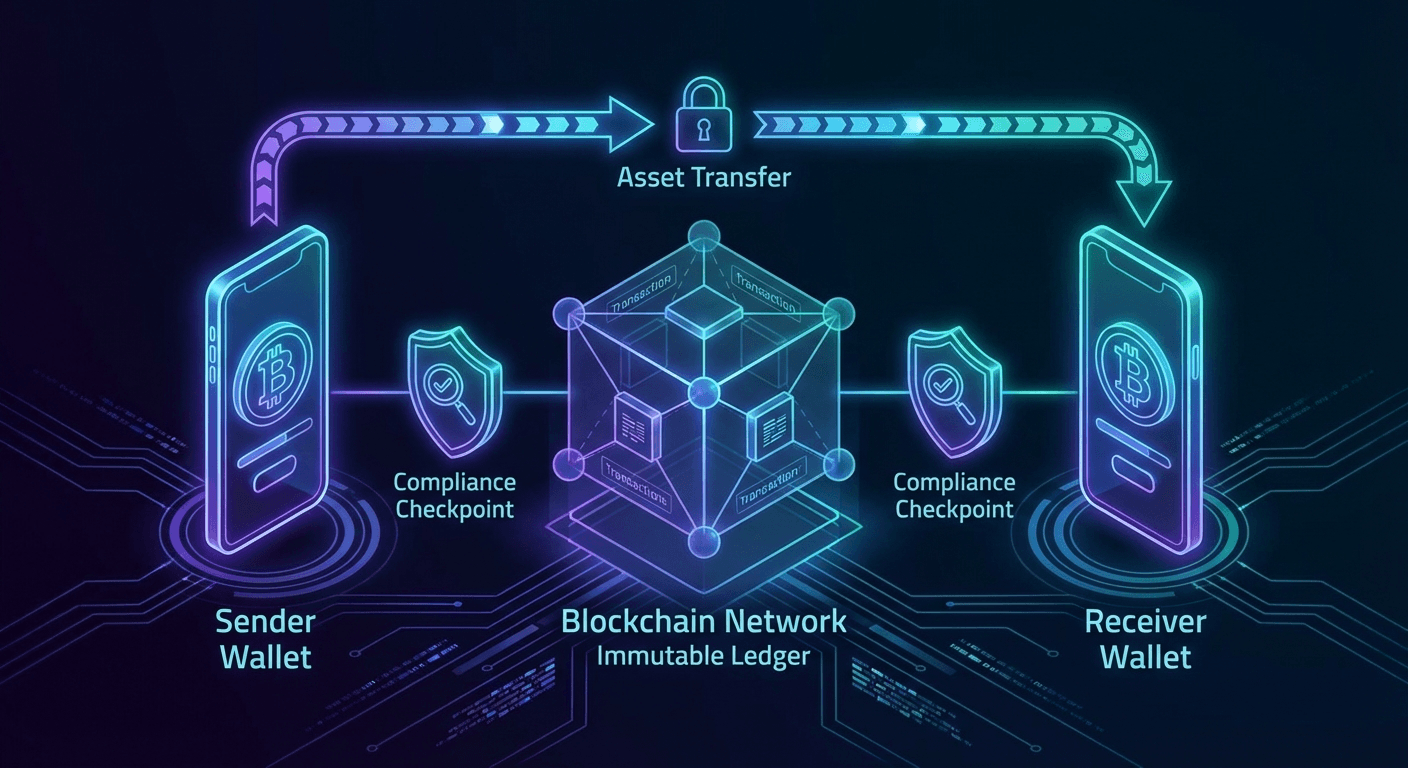
Guideline 1 of the ESMA framework establishes comprehensive disclosure requirements that crypto-asset service providers must fulfill before clients enter into transfer service agreements. These requirements go far beyond simple terms and conditions—they mandate detailed, structured information that enables clients to understand exactly how transfer services work, what risks they face, and what rights they hold.
The mandatory disclosure list is extensive. Providers must communicate their identity and contact information, the name of their supervising national authority, a description of the transfer service’s main characteristics, and detailed procedures for initiating, consenting to, and withdrawing transfer instructions. They must also disclose the conditions under which they may reject transfer instructions, all applicable execution times and cut-off times, and a comprehensive breakdown of all charges, fees, and commissions.
A particularly significant requirement is the obligation to explain, per crypto-asset, which distributed ledger technology (DLT) networks are supported for transfers. This technical transparency enables clients to understand the infrastructure underpinning their transactions and make informed decisions about network selection based on factors like speed, cost, and security. Providers must also disclose the estimated time or number of block confirmations needed for transfer irreversibility—a critical piece of information given the varying finality characteristics of different blockchain networks.
The guidelines also require providers to establish secure notification procedures for suspected or actual fraud and security threats, define the means and timeframes for clients to report unauthorized or incorrect transfers, and clearly communicate the client’s right to terminate the transfer service agreement. All information must be provided in “easily understandable words and in a clear and comprehensible form”—a plain language requirement that challenges the crypto industry’s tendency toward technical jargon. The Financial Services Regulatory Outlook 2026 provides additional context on how disclosure requirements are evolving across regulated financial services.
📊 Explore this analysis with interactive data visualizations
Pre-Transfer and Post-Transfer Information Under MiCA
Guideline 2 establishes a two-stage information framework that covers both the period before a transfer is executed and the confirmation provided afterward. This dual-stage approach ensures that clients are fully informed at every step of the transfer process, creating a comprehensive information trail that supports both investor protection and regulatory oversight.
Before executing any crypto-asset transfer, providers must furnish clients with a standardized warning about whether and when the transfer will become irreversible—or sufficiently irreversible in cases of probabilistic settlement. This requirement addresses a fundamental characteristic of blockchain technology: the varying degrees of transaction finality across different networks. For clients accustomed to traditional banking where transactions can typically be reversed, understanding the irreversible nature of many crypto transfers is essential for informed decision-making.
The pre-transfer disclosure must also include a detailed breakdown of all charges payable by the client. Critically, the guidelines require providers to distinguish between gas fees charged by the underlying DLT network and other fees the provider charges for their services. This separation of network costs from service costs brings welcome transparency to crypto transfer pricing, enabling clients to evaluate whether the provider’s markup is reasonable relative to the underlying infrastructure costs.
Post-execution, providers must confirm the transfer details including the names of originator and beneficiary, wallet addresses or account numbers, the amount and type of crypto-asset transferred, a reference number, the date and time of execution, and the total charges applied. This comprehensive confirmation creates an audit trail that serves both client information needs and regulatory compliance requirements under the Transfer of Funds Regulation (TOFR).
Execution Times and Cut-Off Rules for Crypto Transfers
Guideline 3 addresses one of the most practical aspects of crypto-asset transfer services: execution timing. The guidelines require providers to establish and communicate clear maximum execution times for transfer services, providing clients with predictable service level expectations. This is particularly important in the crypto-asset market, where transfer times can vary dramatically depending on network congestion, consensus mechanisms, and provider processing capabilities.
Providers must also establish and disclose cut-off times—the deadlines after which an instruction received will be treated as received on the next business day or processing cycle. This concept, familiar from traditional banking, brings structured expectations to crypto transfer processing. Clients need to understand that instructions submitted after the cut-off time may not be processed immediately, even though the underlying blockchain operates continuously.
The interplay between DLT-native transaction times and provider processing times creates nuance in execution time disclosure. While a blockchain transaction may achieve finality within minutes or seconds, the provider’s internal processing—including compliance checks, TOFR requirements, and risk assessments—may add additional time. The guidelines require transparency about both components, ensuring clients understand the total time from instruction to completion.
For providers, the execution time requirements create both operational challenges and competitive opportunities. Providers that invest in efficient processing infrastructure, automated compliance checks, and optimized DLT network integration can offer faster execution times as a competitive differentiator. The requirement to disclose and commit to maximum execution times also creates accountability—providers that consistently fail to meet their stated timelines face regulatory scrutiny and reputational damage.

Transfer Rejection and Suspension: When CASPs Can Block Transactions
Guideline 4 addresses the circumstances under which crypto-asset service providers may reject, suspend, or reverse transfer instructions. This guideline balances client rights with the provider’s obligations under anti-money laundering, counter-terrorism financing, and sanctions regulations. Understanding these rejection grounds is critical for both providers implementing compliance frameworks and clients seeking clarity on when their transfers may be impeded.
The guidelines establish that providers must clearly define and communicate the conditions under which they may reject transfer instructions. These conditions typically include compliance failures under the Transfer of Funds Regulation (TOFR), suspected money laundering or terrorism financing, sanctions screening hits, and technical issues with the destination address or DLT network. Each rejection must be accompanied by appropriate client notification, including the reason for rejection where legally permissible.
Suspension of transfers—where the provider holds the crypto-assets pending resolution of a compliance concern—requires particular procedural care. The guidelines mandate that providers establish clear internal procedures for escalation, investigation, and resolution of suspended transfers. The client must be informed that their transfer has been suspended, and the provider must resolve the suspension within reasonable timeframes. Extended suspensions without resolution risk both regulatory and legal consequences.
The return of crypto-assets following rejection or suspension also receives detailed treatment. Providers must establish procedures for returning crypto-assets to the originating client promptly and without additional charges when a transfer cannot be completed. This return obligation protects clients from having their assets effectively frozen by compliance processes. The EBA Risk Assessment Report 2025 provides complementary perspective on how compliance frameworks are being implemented across regulated digital asset services.
📊 Explore this analysis with interactive data visualizations
CASP Liability Framework: Protecting Clients From Transfer Errors
Guideline 5 establishes the liability framework for crypto-asset service providers in relation to transfer services. This guideline creates accountability for unauthorized, incorrect, or failed transfers—a critical component of investor protection in the digital asset space. The liability framework draws parallels with established financial services regulation while accounting for the unique characteristics of blockchain-based transfers.
Providers must establish and communicate maximum liability amounts for unauthorized or incorrectly executed transfers. This creates financial protection for clients while providing legal certainty for providers about their exposure. The liability framework covers several scenarios: transfers executed without proper client authorization, transfers sent to incorrect addresses due to provider error, transfers executed for incorrect amounts, and transfers that fail to execute within the stated maximum execution time.
The guidelines require providers to establish clear procedures for clients to report unauthorized or incorrect transfers, including defined timeframes for reporting. This notification obligation serves a dual purpose: it enables providers to take remedial action promptly (such as attempting to reverse or redirect a transfer) and it establishes clear timelines for liability claims. The interplay between client notification obligations and provider liability creates a structured dispute resolution framework.
For the broader crypto industry, this liability framework represents a significant maturation step. Traditional financial services have long operated under established liability regimes—from payment services to securities custody—that allocate risk between providers and clients based on decades of regulatory and legal development. The ESMA MiCA transfer services guidelines bring comparable structure to crypto-asset services, creating the legal certainty that institutional participants require to engage with the market at scale. For an in-depth look at how these frameworks connect to broader market infrastructure, see the ESMA MiCA policy hub.
DLT Network Requirements and Technical Compliance Standards
The ESMA guidelines introduce specific technical requirements related to distributed ledger technology networks that support crypto-asset transfers. These requirements bridge the gap between traditional financial regulation—which typically focuses on institutional processes—and the technical realities of blockchain infrastructure. For CASPs, compliance requires both regulatory expertise and deep technical understanding of the DLT networks they support.
A key requirement is the obligation to provide per-asset, per-network information about supported transfer pathways. Providers must explain which DLT networks they support for each crypto-asset, the estimated time or block confirmations needed for settlement finality, and the specific characteristics of each supported network. This granular transparency enables clients to make informed decisions about which network to use for their transfers, considering factors like cost, speed, and security guarantees.
The concept of probabilistic settlement receives particular attention in the guidelines. Many blockchain networks—including Bitcoin and Ethereum’s proof-of-work predecessor—operate on probabilistic finality, where the probability of transaction reversal decreases with each subsequent block but never reaches absolute zero. The guidelines require providers to address this characteristic transparently, establishing thresholds for when a transfer is “considered sufficiently irreversible.” This practical approach acknowledges blockchain’s technical reality while providing clients with meaningful certainty about transaction finality.
For providers operating across multiple DLT networks, the compliance burden is proportional to their network coverage. Each supported network requires documented analysis of settlement characteristics, fee structures, and security properties. Providers must maintain this documentation as networks evolve through protocol upgrades, consensus mechanism changes, and security updates. As explored in the analysis of technology capabilities and limitations, understanding the technical infrastructure underlying financial services is increasingly important for both providers and regulators.

Compliance Timeline and Implementation for MiCA Transfer Guidelines
The implementation timeline for the ESMA MiCA transfer services guidelines creates structured obligations for both competent authorities and crypto-asset service providers. Understanding this timeline is essential for organizations planning their compliance programs and allocating resources for MiCA implementation.
Competent authorities face the most immediate obligations. Within two months of the guidelines’ publication in all EU official languages, they must notify ESMA of their compliance status using one of three categories: full compliance, non-compliance with intent to comply, or non-compliance without intent to comply. Authorities choosing the latter two options must provide detailed reasons for non-compliance. This compliance notification mechanism creates transparency about regulatory adoption across the EU and identifies jurisdictions that may require additional engagement.
For crypto-asset service providers, the practical compliance timeline is driven by the 60-day application period plus the time needed for policy development, systems implementation, and staff training. Given the comprehensive nature of the requirements—covering information disclosure, execution procedures, liability frameworks, complaint handling, and technical documentation—many providers will need several months of preparation before the effective date. Early engagement with the guidelines is strongly recommended.
The compliance challenge is amplified for providers operating across multiple EU member states, as they must monitor how each competent authority interprets and implements the guidelines. While the goal is harmonization, practical variations in supervisory approach are inevitable. Providers should establish monitoring systems to track regulatory developments across their operational jurisdictions and maintain dialogue with their primary supervisors. The banking risk management framework offers relevant models for managing multi-jurisdictional regulatory compliance in financial services.
Impact on the European Crypto-Asset Market and Industry Outlook
The ESMA MiCA transfer services guidelines will reshape the European crypto-asset market in several important ways. Most fundamentally, they establish a level playing field for transfer service providers across the EU, replacing the fragmented regulatory landscape that previously created competitive distortions between jurisdictions. Providers that have invested in compliance will benefit from regulatory clarity and enhanced client trust, while those unable or unwilling to meet the standards will face market exit or operational restrictions.
For institutional market participants—including asset managers, banks, and payment companies—the guidelines remove a significant barrier to crypto market engagement. Institutional capital has consistently cited regulatory uncertainty as a primary concern about crypto-asset exposure. By establishing clear rules for transfer services, the guidelines de-risk a critical component of the crypto value chain and support broader institutional adoption. The BCG Global Asset Management Report provides context on how institutional investors are approaching digital asset allocation.
Consumer protection stands to benefit substantially. The comprehensive disclosure requirements, transparent fee structures, and liability frameworks bring crypto-asset transfer services closer to the consumer protection standards that European citizens expect from financial services. This alignment may increase retail participation in the crypto market by building confidence that adequate safeguards are in place.
Looking ahead, the ESMA guidelines establish precedents that will likely influence crypto regulation globally. As jurisdictions worldwide develop their own digital asset frameworks—from the US Treasury’s digital asset initiatives to Asian regulatory developments—the European approach provides a detailed template for transfer service regulation. The ESMA MiCA transfer services guidelines thus represent not just a European regulatory milestone, but a potential global standard-setting moment for crypto-asset governance.
📊 Explore this analysis with interactive data visualizations
Frequently Asked Questions
What are the ESMA MiCA transfer services guidelines?
The ESMA MiCA transfer services guidelines (ESMA35-1872330276-2032) establish rules for crypto-asset service providers offering transfer services under MiCA Article 82. They cover policies and procedures, client rights, information disclosure, execution times, rejection conditions, and liability frameworks for crypto-asset transfers across the European Union.
When do the MiCA transfer services guidelines take effect?
The guidelines apply 60 calendar days from their publication on ESMA’s website in all official EU languages. Published on February 26, 2025, competent authorities must notify ESMA of compliance status within two months. Crypto-asset service providers should use the intervening period to develop and implement required policies and procedures.
What information must crypto-asset service providers disclose to clients?
Providers must disclose: company details and supervising authority, transfer service descriptions, initiation and withdrawal procedures, rejection conditions, execution times and cut-off times, supported DLT networks per crypto-asset, all charges with fee breakdowns, communication methods, fraud notification procedures, and client termination rights. All information must be in clear, comprehensible language.
How does MiCA protect crypto investors during asset transfers?
MiCA protects investors through mandatory pre-transfer information disclosure, standardized warnings about transfer irreversibility, transparent fee breakdowns distinguishing network and provider charges, liability frameworks for unauthorized transfers, maximum execution time requirements, and complaint resolution procedures including access to alternative dispute resolution (ADR) entities.
What are the liability rules for crypto-asset transfer errors under MiCA?
Crypto-asset service providers must establish clear liability frameworks including maximum liability amounts for unauthorized or incorrectly executed transfers. They must implement reporting procedures with defined timeframes, create structured dispute resolution mechanisms, and ensure prompt return of crypto-assets when transfers cannot be completed. The framework parallels established financial services liability standards.



