Tesla 10-K FY2024: Complete Annual Report Analysis — Revenue, Deliveries, FSD & Strategy
Table of Contents
- Introduction: Why Tesla's FY2024 10-K Matters
- Revenue Breakdown: $97.7 Billion Under the Hood
- Vehicle Deliveries: 1.79 Million and a Record Q4
- Profitability and Margins: The Pricing Squeeze
- Energy Storage: The $10 Billion Breakout Star
- Full Self-Driving and AI: 3 Billion Miles and Counting
- Cash Position, Capex and Balance Sheet Strength
- Risk Factors: What Could Derail the Tesla Story
- 2025 Outlook: Cybercab, New Model Y and Growth Return
- What the Tesla 10-K Means for Investors
📌 Key Takeaways
- $97.7B total revenue — a modest 1% increase YoY, with automotive revenue declining 6% while energy and services surged.
- 1.79M vehicles delivered — a slight 1% dip from 2023, but Q4 2024 set a new quarterly record at 495,570 units.
- Energy storage deployed 31.4 GWh — a staggering 114% YoY increase, making energy Tesla's fastest-growing segment.
- $36.6B cash and investments — up 26% YoY, providing a massive war chest for AI, Cybercab and global expansion.
- COGS per vehicle hit an all-time low — under $35,000 in Q4 2024, driven by raw material cost improvements and manufacturing efficiency.
Introduction: Why Tesla's FY2024 10-K Matters
Tesla's Form 10-K for fiscal year 2024, filed with the U.S. Securities and Exchange Commission on January 29, 2025, paints a nuanced picture of a company in transition. Revenue barely grew, vehicle deliveries dipped for the first time in company history, and margins compressed further under fierce global competition. Yet beneath the surface, Tesla executed a dramatic pivot — pouring billions into AI infrastructure, scaling its energy storage business by triple digits, and positioning for what CEO Elon Musk calls "a seminal year" in 2025.
For investors, analysts, and anyone tracking the electric vehicle revolution, the Tesla annual report 10-K is the most comprehensive document available. Unlike quarterly earnings calls dominated by forward-looking hyperbole, the 10-K contains audited financials, detailed risk disclosures, and granular segment data that reveal how Tesla actually operates. This analysis breaks down every critical metric from the Tesla FY2024 financial results — from the $97.7 billion revenue line to the 3+ billion miles driven on Full Self-Driving.
Whether you are evaluating Tesla as an investment, benchmarking it against legacy automakers, or simply trying to understand where the EV market is headed, this Tesla 10-K analysis 2024 provides the data-driven insights you need. The filing reveals a company navigating the tension between near-term margin pressure and long-term platform value — a tension that will define Tesla's trajectory for years to come.
Revenue Breakdown: $97.7 Billion Under the Hood
Tesla's total revenue for FY2024 reached $97.69 billion, a 1% increase from $96.77 billion in FY2023. While the headline number suggests stability, the composition tells a far more revealing story. The company's three revenue segments are diverging at dramatically different rates, signaling a structural shift in Tesla's business model.
Automotive Revenue: -6% YoY
Automotive revenue — still the core of Tesla's business — fell 6% year-over-year to $77.07 billion. This decline was driven primarily by reduced average selling prices (ASPs) on Model 3 and Model Y as Tesla deployed aggressive pricing strategies and financing incentives to maintain volume in an increasingly competitive EV market. Regulatory credit revenue provided a partial offset, with $2.76 billion in credits (up from $1.79 billion in FY2023) as other automakers continued purchasing Tesla's excess credits to meet emissions standards.
Energy Generation and Storage: +67% YoY
The energy segment was Tesla's growth engine, surging 67% to $10.09 billion from $6.04 billion in FY2023. This segment, encompassing Megapack utility-scale batteries, Powerwall residential storage, and solar products, is rapidly becoming material to Tesla's overall financial profile. At over 10% of total revenue, energy is no longer a rounding error — it is a pillar.
Services and Other: +27% YoY
Services and other revenue grew 27% to $10.53 billion, driven by Supercharger network expansion (65,495 connectors globally, up 19%), vehicle servicing, parts sales, and insurance. This segment achieved its third consecutive year of profitability, demonstrating the recurring revenue potential of Tesla's growing installed base of vehicles.
| Revenue Segment | FY2024 | FY2023 | YoY Change |
|---|---|---|---|
| Automotive | $77.07B | $82.42B | -6% |
| Energy Generation & Storage | $10.09B | $6.04B | +67% |
| Services & Other | $10.53B | $8.32B | +27% |
| Total Revenue | $97.69B | $96.77B | +1% |
This revenue mix shift is strategically significant. Tesla is actively de-risking its dependence on vehicle sales by building high-margin, recurring businesses in energy and services — a pattern reminiscent of how Apple transitioned from iPhone dependency to a services-powered platform. As discussed in the Apple 10-K FY2024 analysis, this kind of portfolio diversification typically rewards investors with higher multiples over time.
Vehicle Deliveries: 1.79 Million and a Record Q4
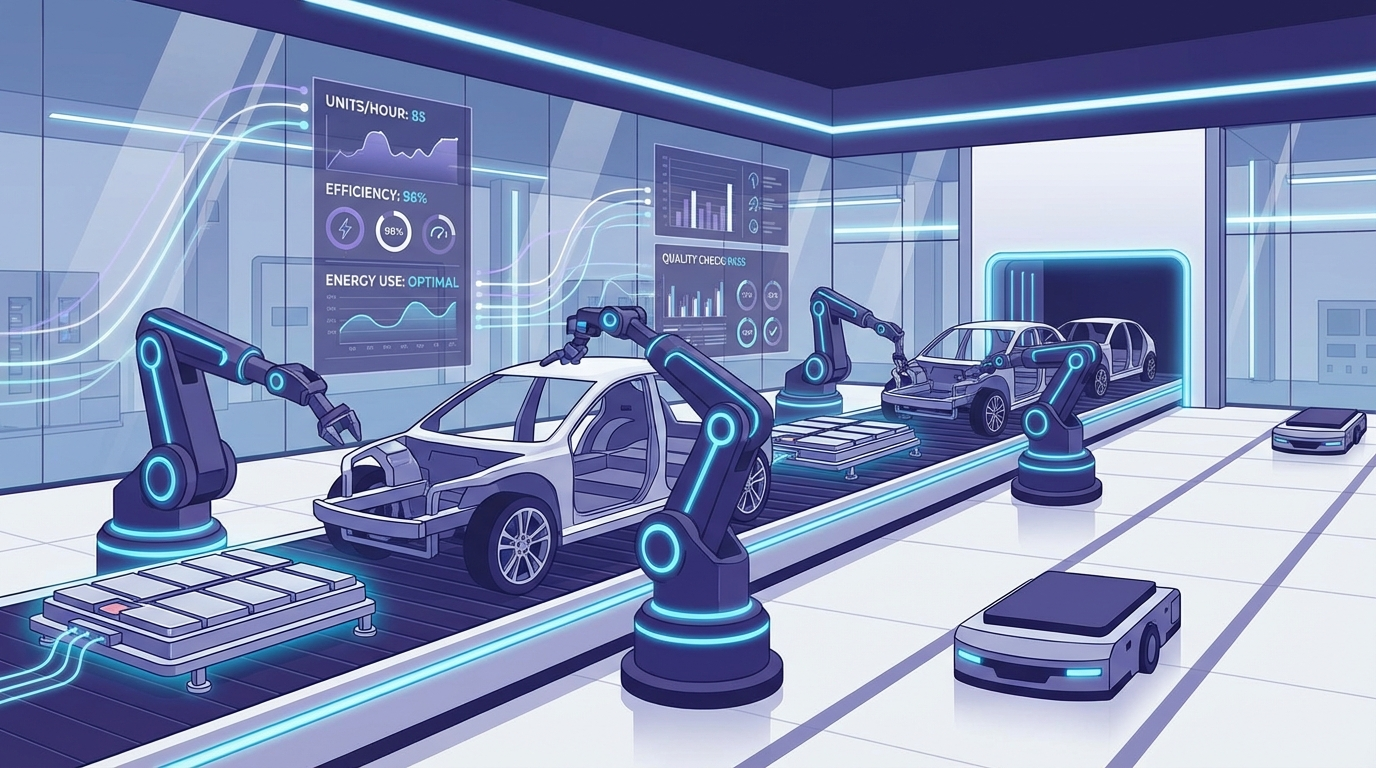
Tesla delivered 1,789,226 vehicles in FY2024, a 1% decline from 1,808,581 in FY2023 — the first annual delivery decrease in the company's history. Total production also fell 4% to 1,773,443 units. These numbers reflect a challenging year marked by factory retooling for the new Model Y, macroeconomic headwinds, and increased competition from Chinese EV makers like BYD, Li Auto, and NIO.
However, the quarterly trajectory tells a more optimistic story. Q4 2024 was a record quarter with 495,570 deliveries, beating Q4 2023's 484,507. Model 3 and Model Y deliveries hit 471,930 in Q4 alone, suggesting strong demand heading into the New Model Y launch in early 2025.
Cybertruck and Other Models
Other models — including Cybertruck, Model S, and Model X — delivered 85,133 units in FY2024, up 24% from 68,874 in FY2023. Cybertruck production ramped throughout the year, with installed annual capacity reaching over 125,000 units at Gigafactory Texas. The stainless-steel truck introduced several technological firsts, including a 48-volt electrical architecture, 800-volt battery system, steer-by-wire, and bidirectional charging (Powershare) — innovations Tesla plans to deploy across future models.
Global Market Position
Tesla reported that Model Y was the best-selling vehicle of any type in Denmark, Norway, Sweden, Switzerland, and the Netherlands in 2024. In China, Tesla achieved record deliveries in Q4, and Model Y was the best-selling vehicle for the full year. The company expanded to new markets including the Philippines and grew its total location count by 13% to 1,359 globally.
Global vehicle inventory fell to just 13 days of supply (from 16 in FY2023), indicating healthy demand relative to production — a metric that legacy automakers with 60-90 days of inventory can only envy.
Turn complex financial reports into interactive experiences your team actually reads.
Profitability and Margins: The Pricing Squeeze
Tesla's profitability picture in FY2024 reflects the cost of aggressive growth and competitive pricing. GAAP operating income fell 20% to $7.08 billion, producing a 7.2% operating margin — down from 9.2% in FY2023 and far below the 16.8% peak in FY2022. The margin compression was driven by a combination of lower vehicle ASPs, higher operating expenses from AI and R&D investments, and restructuring charges totaling $684 million.
Cost Structure Improvements
Despite margin pressure, Tesla achieved a significant milestone: cost of goods sold per vehicle hit an all-time low of under $35,000 in Q4 2024. This was driven by raw material cost reductions, improved manufacturing efficiency, and benefits from the U.S. Inflation Reduction Act (IRA) credits. The company's relentless focus on production cost reduction — from in-house 4680 battery cell production exceeding 2,500 Cybertruck-equivalents per week to the lithium refinery processing its first spodumene — positions Tesla to maintain competitiveness even as vehicle prices decline.
Profit by the Numbers
| Metric | FY2024 | FY2023 | YoY Change |
|---|---|---|---|
| GAAP Operating Income | $7.08B | $8.89B | -20% |
| Operating Margin | 7.2% | 9.2% | -194 bp |
| GAAP Net Income | $7.09B | $15.0B | -53% |
| Non-GAAP Net Income | $8.42B | $10.88B | -23% |
| Adjusted EBITDA | $16.65B | $16.63B | ~flat |
| Adjusted EBITDA Margin | 17.0% | 17.2% | -15 bp |
The stark difference between GAAP net income (-53% YoY) and adjusted EBITDA (flat) reveals important nuances. FY2023 GAAP net income was inflated by a one-time $5.9 billion tax benefit from releasing valuation allowances on deferred tax assets. Stripping out non-cash items and SBC, Tesla's underlying profitability was far more stable than the headline GAAP numbers suggest — a critical distinction for anyone conducting a Tesla 10-K analysis 2024.
Energy Storage: The $10 Billion Breakout Star
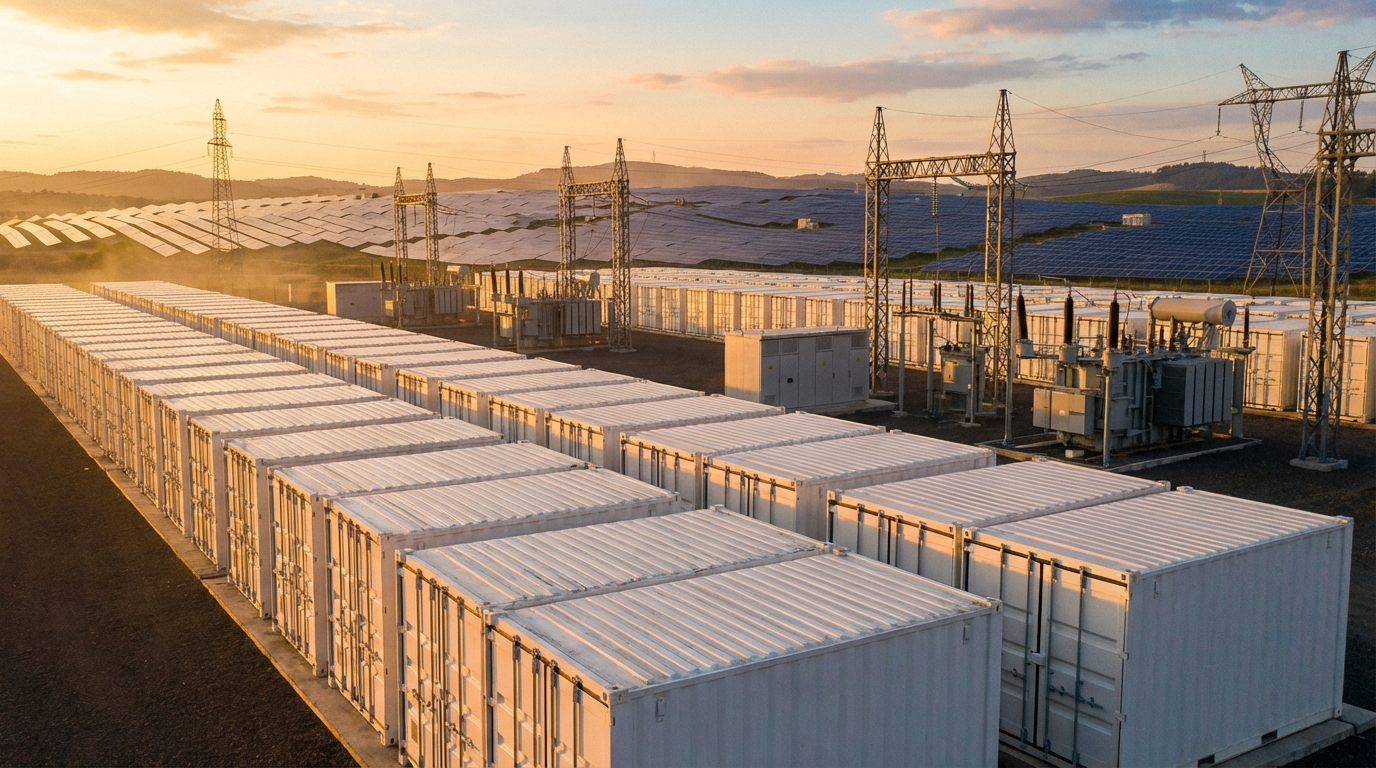
If there is one section of the Tesla annual report 10-K that should command investor attention, it is energy storage. Tesla deployed 31.4 GWh of energy storage in FY2024 — a 114% increase from 14.7 GWh in FY2023 and a 383% increase from 6.5 GWh in FY2022. This is not a marginal business line; it is a structural growth driver.
Megapack: Utility-Scale Dominance
Q4 2024 set a quarterly deployment record of 11.0 GWh, driven by Megapack demand from utilities and grid operators worldwide. The Lathrop, California Megafactory continued to reduce material and manufacturing costs, and Tesla completed construction of Megafactory Shanghai in December 2024 — a facility that will begin ramping in Q1 2025, effectively doubling Megapack production capacity.
Powerwall: Residential Growth
Powerwall deployments also hit a record in Q4 as Tesla ramped Powerwall 3 production and expanded into additional markets. Both Megapack and Powerwall remain supply constrained, suggesting that revenue growth in this segment is limited only by Tesla's ability to build manufacturing capacity — a fundamentally different dynamic than the demand-constrained automotive business.
The energy segment's gross profit reached record levels in Q4 2024, with improving unit economics as the Lathrop factory matured. Tesla expects energy storage deployments to grow at least 50% in 2025 — which, given the Shanghai Megafactory ramp, could prove conservative. This mirrors broader market trends highlighted in the JP Morgan Market Outlook 2025, which identifies clean energy infrastructure as a secular growth theme.
Full Self-Driving and AI: 3 Billion Miles and Counting
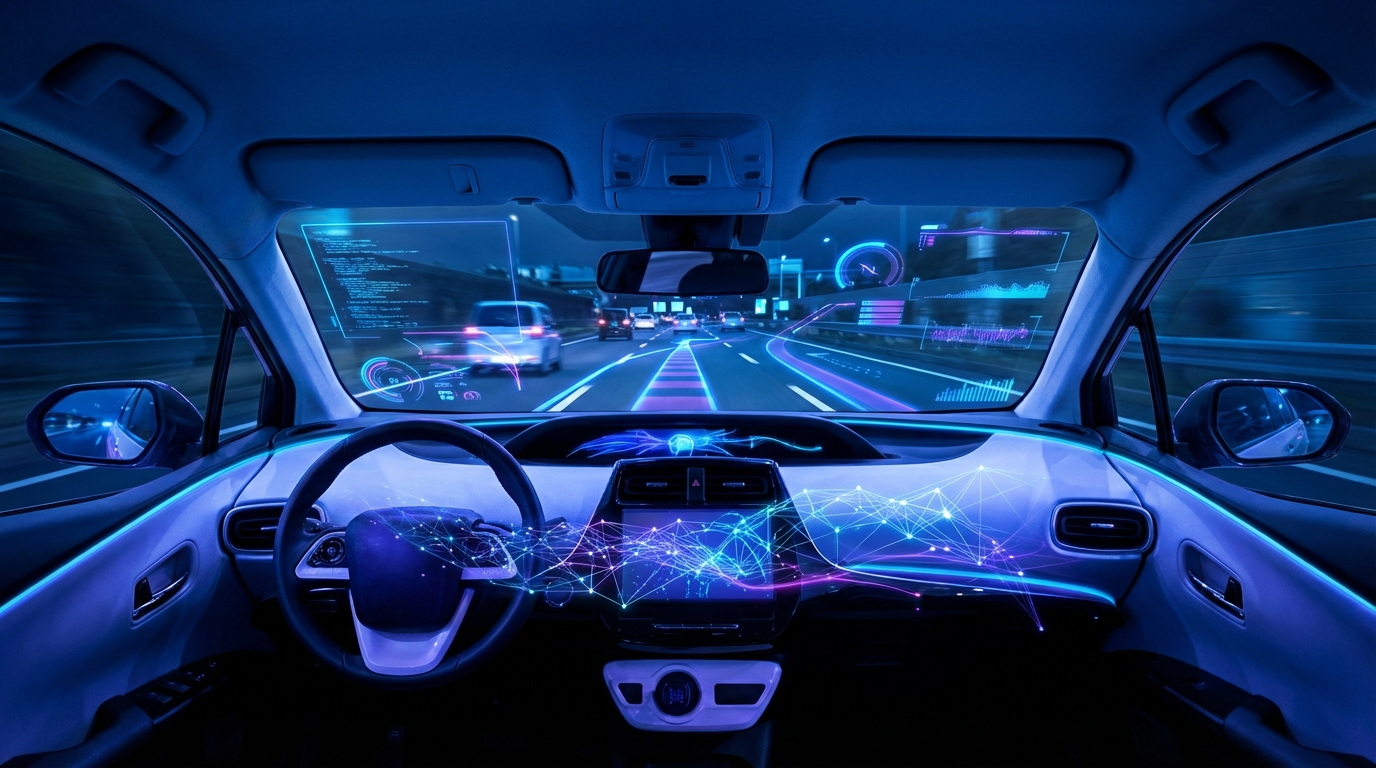
Tesla's AI and autonomy efforts represent the largest speculative bet in the 10-K — and arguably the most transformative. The company surpassed 3 billion cumulative miles driven on FSD (Supervised) by January 2025, with the rate of accumulation accelerating dramatically thanks to expanded access and improved software.
Cortex and V13: The Technical Leap
In Q4 2024, Tesla completed deployment of Cortex, a ~50,000 H100 GPU training cluster at Gigafactory Texas. This cluster enabled FSD V13, which Tesla describes as a major leap in safety and comfort featuring:
- 4.2x increase in training data volume
- Higher resolution video inputs from all cameras
- 2x reduction in photon-to-control latency
- Redesigned controller architecture
- New capabilities: start from park, unpark, reverse, and park
Tesla increased AI training compute by over 400% in 2024 — a massive infrastructure investment that shows up in the $11.34 billion capital expenditure line (+27% YoY). The company frames this as building the foundation for unsupervised autonomy and the Robotaxi business.
Safety Metrics
In Q4 2024, Tesla vehicles using Autopilot technology drove 5.94 million miles between accidents — the best Q4 ever — compared to the U.S. national average of 0.70 million miles. While these self-reported metrics have methodological limitations, the magnitude of the gap suggests meaningful safety improvement.
The intersection of AI and autonomous driving has implications far beyond Tesla. As explored in the Stanford AI Index 2025 report, autonomous vehicle technology is entering a new phase of commercial viability, with real-world deployment data becoming the primary differentiator.
Make your financial analysis interactive — transform reports into engaging experiences.
Cash Position, Capex and Balance Sheet Strength
Tesla ended FY2024 with $36.56 billion in cash, cash equivalents, and investments — up 26% from $29.09 billion at year-end 2023. This $7.5 billion increase occurred despite $11.34 billion in capital expenditures, reflecting strong operating cash flow generation of $14.92 billion (+13% YoY).
Capital Expenditure: Betting on the Future
The $11.34 billion capex figure is Tesla's highest ever, directed toward:
- AI training infrastructure — Cortex cluster and compute expansion
- New vehicle manufacturing lines — Cybercab and new affordable models at existing factories
- Energy storage capacity — Megafactory Shanghai and Lathrop expansion
- Semi factory construction — first truck builds scheduled for end of 2025
- Lithium refinery — on track for commissioning in 2025
Free cash flow came in at $3.58 billion, down 18% YoY as capex growth outpaced operating cash flow growth. However, the quality of the capex investment — AI compute, manufacturing capacity, vertical integration — suggests these are building blocks for future returns rather than maintenance spending.
Balance Sheet Highlights
Total assets grew to $122.07 billion, with stockholders' equity reaching $72.91 billion. Tesla's debt profile remains conservative: total non-recourse debt of $7.87 billion is entirely backed by specific assets (primarily vehicle and energy product financing), while recourse debt is a negligible $7 million. The company also disclosed $1.08 billion in digital assets (primarily Bitcoin), up from $184 million at the start of the year, reflecting mark-to-market gains on its cryptocurrency holdings.
This fortress balance sheet gives Tesla significant optionality. As the Fed Financial Stability Report 2025 notes, companies with strong balance sheets are best positioned to navigate periods of economic uncertainty and rising capital costs.
Risk Factors: What Could Derail the Tesla Story
Tesla's 10-K contains extensive risk factor disclosures that responsible investors must weigh against the growth narrative. Here are the most material risks identified in the Tesla FY2024 financial results:
Competition and Pricing Pressure
The global EV market is intensifying rapidly. Chinese manufacturers like BYD — which surpassed Tesla in total EV sales in some quarters — compete aggressively on price and features. Legacy automakers including Volkswagen, Hyundai-Kia, and Ford are scaling their EV portfolios. Tesla acknowledges increasing competition not just for vehicle sales but also for self-driving technologies, charging infrastructure, and services. The continued decline in vehicle ASPs reflects this competitive reality.
Regulatory and Geopolitical Risk
Tesla's significant manufacturing presence in China (Gigafactory Shanghai is its highest-volume plant) exposes it to U.S.-China trade tensions, tariffs, and regulatory unpredictability. The FY2024 filing notes risks from changes to EV incentive programs, including the U.S. Inflation Reduction Act, and potential impacts from tariff policy shifts. Given that approximately 50% of Tesla's production capacity sits in Shanghai, any disruption could materially affect global supply.
Autonomous Driving: Promise vs. Timeline
Tesla's FSD technology carries regulatory approval risk. Despite 3 billion miles of supervised driving data, the transition from "supervised" to "unsupervised" autonomy requires regulatory clearance that Tesla does not control. Delays in FSD approval — or adverse regulatory decisions — could impair the Robotaxi business model that underpins a significant portion of Tesla's market capitalization premium. This risk mirrors broader regulatory challenges facing AI deployment, as documented in the EU AI Act Compliance Guide.
Key Person Risk
Elon Musk's role as CEO of Tesla, SpaceX, and xAI — plus his advisory role in the U.S. government (DOGE) — creates concentration risk. His public statements can move Tesla's stock by billions, and his divided attention across multiple ventures is a legitimate governance concern that institutional investors increasingly raise.
Execution Risk on New Products
Tesla's 2025-2026 product roadmap is ambitious: new affordable models (first half 2025), Cybercab volume production (2026), Semi factory builds (end of 2025), Optimus humanoid robot pilot production (2025), and FSD launches in Europe and China. History shows that Tesla regularly misses self-imposed timelines, and each delay carries both financial and reputational cost.
Stop sending static reports. Create interactive experiences that drive engagement.
2025 Outlook: Cybercab, New Model Y and Growth Return
Tesla's outlook section in the 10-K offers a window into management's priorities and confidence level. The key forward-looking statements from the Tesla annual report 10-K include:
Vehicle Business: Return to Growth
Tesla expects the vehicle business to "return to growth in 2025," driven by:
- New Model Y — launched globally in Q1 2025 with significant improvements
- More affordable models — production starting first half 2025, using a hybrid of next-generation and current platform components on existing manufacturing lines
- Cybertruck IRA eligibility — expected to improve affordability and access
Tesla now targets close to 3 million vehicles of maximum capacity by utilizing existing lines — more than 60% above FY2024 production — before investing in new manufacturing infrastructure. This capital-light approach represents a strategic pivot from the previously announced dedicated next-generation platform, trading maximum cost reduction for speed-to-market flexibility.
Cybercab and Robotaxi
The purpose-built Cybercab is scheduled for volume production starting in 2026, manufactured using an "unboxed" strategy at Gigafactory Texas. Cybercab line preparation is already underway. Meanwhile, Tesla plans to begin launching its Robotaxi service "later this year" in parts of the U.S., contingent on FSD reaching unsupervised capability levels.
Energy Storage: 50%+ Growth Target
Tesla expects energy storage deployments to grow at least 50% YoY in 2025, implying roughly 47+ GWh. With Shanghai Megafactory ramping and Lathrop continuing to optimize, this target appears achievable and potentially conservative.
Optimus: From Lab to Pilot Production
The humanoid robot project, Optimus, progresses toward planned pilot production in 2025. Q4 updates included a latest-generation hand, improved locomotion, and training on additional tasks. While Optimus remains early-stage and contributes zero current revenue, Tesla views it as a massive long-term market opportunity.
What the Tesla 10-K Means for Investors
Reading Tesla's FY2024 10-K through a traditional automotive lens reveals a company under margin pressure with declining deliveries and compressed profitability. Reading it through a technology and platform lens reveals something quite different: a company with $36.6 billion in cash, the world's largest real-world driving dataset, a rapidly scaling energy business, and products in development that could redefine transportation.
The key tension in the Tesla 10-K analysis 2024 is between present financial performance and future platform optionality:
- Bears see: declining automotive revenue, compressed margins, first-ever delivery decline, rising competition from BYD, regulatory uncertainty for FSD, Musk distraction
- Bulls see: energy storage growing 114%, COGS per vehicle at all-time lows, $36.6B cash fortress, 3B+ FSD miles, Robotaxi business launching 2025, 50k GPU training cluster, installed capacity approaching 3M vehicles
What is undeniable from the Tesla FY2024 financial results is that Tesla is investing more aggressively than ever in its future — $11.3 billion in capex, 400% increase in AI training compute — while maintaining a conservative balance sheet. Whether these investments pay off depends on execution: can Tesla actually launch unsupervised FSD, ramp affordable models profitably, and scale energy storage to match demand?
For those who want to dig deeper into market dynamics and investment implications, the PwC Global CEO Survey 2025 provides valuable context on how business leaders across industries are navigating similar innovation-vs-profitability tradeoffs. Additionally, understanding macroeconomic risks is essential — the WEF Global Risks Report 2025 details geopolitical and economic threats that could impact Tesla's global operations.
The 10-K does not answer the ultimate question — is Tesla worth its market capitalization? But it provides the data to form your own view. And in a market dominated by narrative, that's worth its weight in gold.
Frequently Asked Questions
What was Tesla's total revenue in FY2024?
Tesla reported total revenue of $97.69 billion for fiscal year 2024, a modest 1% increase from $96.77 billion in FY2023. While automotive revenue declined 6% to $77.07 billion, this was offset by 67% growth in energy generation and storage ($10.09 billion) and 27% growth in services and other revenue ($10.53 billion).
How many vehicles did Tesla deliver in 2024?
Tesla delivered 1,789,226 vehicles in FY2024, a slight 1% decrease from 1,808,581 in FY2023. Q4 2024 was a record quarter with 495,570 deliveries. Model 3 and Model Y accounted for 1,704,093 deliveries, while other models including Cybertruck contributed 85,133 units, up 24% year-over-year.
What is Tesla's Full Self-Driving (FSD) progress in 2024?
Tesla surpassed 3 billion cumulative miles driven on FSD (Supervised) by January 2025. The company deployed Cortex, a ~50,000 H100 GPU training cluster, and released FSD V13 with 4.2x more training data and 2x reduction in photon-to-control latency. Tesla plans to launch unsupervised FSD and its Robotaxi business in parts of the U.S. in 2025.
How did Tesla's energy storage business perform in FY2024?
Tesla's energy business was the standout performer in FY2024, deploying 31.4 GWh of energy storage — a 114% increase year-over-year. Revenue from energy generation and storage reached $10.09 billion, up 67% from $6.04 billion in FY2023. The company completed construction of Megafactory Shanghai in December 2024, with ramp beginning in Q1 2025.
What are Tesla's key risk factors from the 10-K filing?
Key risk factors disclosed in Tesla's FY2024 10-K include intense competition in the EV market driving ASP declines, dependency on regulatory credits for profitability, geopolitical risks in China, supply chain disruptions, execution risk on new products like Cybercab and Semi, and uncertainty around autonomous driving regulatory approval timelines.