
Cloud Computing Trends 2025: Key Insights from the Cloud Awards Market Report
Table of Contents
- Cloud Computing Trends 2025: The Market Landscape
- How AI Is Reshaping Cloud Computing Trends in 2025
- Hybrid and Multicloud: The Dominant Cloud Computing Trend of 2025
- Cloud Security Trends 2025: Protecting an Expanding Attack Surface
- Cloud Computing Trends 2025: SaaS Market Evolution
- Edge Computing and Serverless: Emerging Cloud Computing Trends 2025
- Cloud Computing Trends 2025: What’s Driving Adoption
- Cloud Computing Trends 2025: Migration Blockers and How to Overcome Them
- FinTech and Cloud Computing Trends 2025: A Convergence Story
- The Asia-Pacific Cloud Computing Boom
- Explore the Full Cloud Awards 2025 Report Interactively
- What Industry Leaders Predict for Cloud Computing Beyond 2025
- Key Takeaways: Cloud Computing Trends 2025
🔑 Key Takeaways
- Cloud Computing Trends 2025: The Market Landscape — The cloud computing market continues its robust expansion, driven by digital transformation across virtually every industry and the accelerating integration of generative AI.
- How AI Is Reshaping Cloud Computing Trends in 2025 — If 2023 was the year AI “crashed the party” in cloud computing, 2025 is the year it became the life and soul of the gathering.
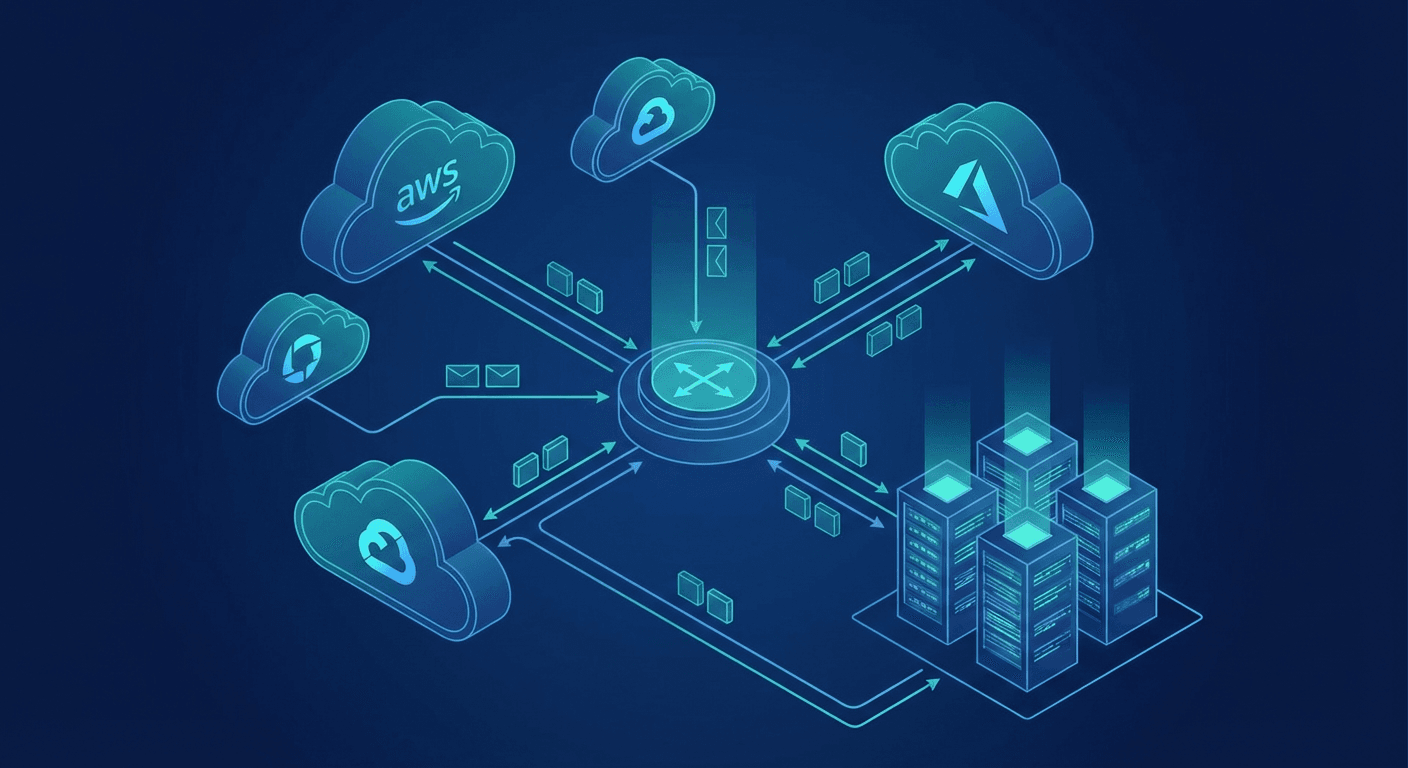
- Hybrid and Multicloud: The Dominant Cloud Computing Trend of 2025 — One of the most significant cloud computing trends 2025 is the decisive shift toward hybrid and multicloud architectures.
- Cloud Security Trends 2025: Protecting an Expanding Attack Surface — As organizations diversify their cloud environments, they simultaneously expand their potential attack surface — making security one of the most critical cloud computing trends 2025.
- Cloud Computing Trends 2025: SaaS Market Evolution — The SaaS market sits at the epicenter of several cloud computing trends 2025.
Cloud Computing Trends 2025: The Market Landscape
The cloud computing market continues its robust expansion, driven by digital transformation across virtually every industry and the accelerating integration of generative AI. The Cloud Awards report reveals that the global market outperformed previous estimates, hitting $735.45 billion in 2024 — surpassing the $690 billion projection — before its expected leap to approximately $833 billion in 2025.
This growth trajectory is underpinned by several fundamental shifts. Cloud computing has become the default starting point for organizations modernizing their technology stacks. As the report notes, the gap is widening for organizations that have hesitated in investing in cloud migration, creating a two-speed digital economy where cloud-native businesses increasingly outpace their legacy-bound competitors.
Key market indicators from the report paint a compelling picture:
- 100 zettabytes of data are now stored in the cloud globally
- 94% of organizations reported improved security posture after migrating to the cloud
- 56% of businesses with $500M+ revenue have adopted hybrid cloud approaches
- 85% of business applications are now SaaS-based
- Award entrants gave a 9.4/10 confidence score for the cloud industry’s prospects
Perhaps most telling is the sentiment from industry practitioners: 91% predict cloud services growth will accelerate in the next 12 months, with zero respondents predicting decline. This near-unanimous confidence underscores that cloud computing trends 2025 are not speculative — they reflect an industry moving faster than forecasts can track.
How AI Is Reshaping Cloud Computing Trends in 2025
If 2023 was the year AI “crashed the party” in cloud computing, 2025 is the year it became the life and soul of the gathering. The Cloud Awards report reveals that 72% of organizations have adopted AI in at least one business function, with 78% planning to expand their AI usage. This isn’t a peripheral trend — it’s the central force driving cloud computing trends 2025.
The numbers are staggering. The global cloud AI market is projected to grow at a 32.4% compound annual growth rate between 2024 and 2029, reaching $327.15 billion by decade’s end. This growth demands massive infrastructure investment, with an estimated $1.45 trillion flowing into data center and AI-related hardware markets.

The report identifies several key dimensions of AI’s cloud transformation:
The Rise of Neoclouds
Specialized AI cloud services — dubbed “neoclouds” — are emerging as a significant force. Hardware manufacturers are entering the market by creating their own AI clouds, renting out servers powered by advanced chips and hosting AI development platforms. This gives smaller businesses the ability to innovate without massive capital investment in proprietary hardware, while simultaneously intensifying competition among larger cloud service providers.
The DeepSeek Disruption
The report opens with a stark reminder of AI’s disruptive potential: the reveal of DeepSeek, China’s answer to ChatGPT, prompted a historic $600 billion single-day wipeout of Nvidia’s stock and a broader 3% decline in the NASDAQ index. This event illustrates how cloud computing trends 2025 are intertwined with geopolitical dynamics and can shift dramatically overnight.
AI-Driven Cloud Management
Beyond serving as a workload, AI is increasingly managing cloud infrastructure itself. From intelligent resource allocation to predictive maintenance and automated security monitoring, AI is becoming the operational brain of modern cloud environments. As Tal Zamir, CTO of Perception Point, notes in the report: “The rapid proliferation of Generative AI will necessitate a dramatic increase in computational resources, propelling cloud infrastructure to new heights.”
Hybrid and Multicloud: The Dominant Cloud Computing Trend of 2025
One of the most significant cloud computing trends 2025 is the decisive shift toward hybrid and multicloud architectures. The report reveals that approximately 56% of businesses with $500M+ revenue have already adopted hybrid cloud setups — and this percentage is climbing rapidly.
The motivation is clear: reducing risk. High-profile infrastructure failures in 2024 caused mass disruption to users and astronomical costs to businesses. By distributing workloads across multiple cloud environments, organizations reduce their exposure to any single point of failure.
“While cloud adoption is not a ‘one size fits all’ approach, hybrid models offer a more tailored solution, allowing businesses to balance performance, security, and cost. However, the ongoing shortage of skilled talent to manage complex cloud infrastructures remains a significant challenge.” — Prashant Ketkar, CTO/CPO, Alludo
The multicloud trend is reinforced by the growing desire to avoid vendor lock-in, which report respondents identified as a persistent adoption blocker. Francis Chow, VP and GM at Red Hat, predicts in the report that “wider uptake of multi- and hybrid-cloud” will be one of the defining movements of the year, as no single provider can satisfy requirements for every workload and use case.
This diversification is fueling innovation in cloud infrastructure. Hyperscalers are investing heavily in expanding data centers, improving connectivity, and integrating AI-powered management services. Winners like Penguin Solutions and Tessell from the Cloud Awards exemplify this trend, with platforms designed to support multiple cloud environments and evolving enterprise needs.
📊 Explore this analysis with interactive data visualizations
Cloud Security Trends 2025: Protecting an Expanding Attack Surface
As organizations diversify their cloud environments, they simultaneously expand their potential attack surface — making security one of the most critical cloud computing trends 2025. The global cloud security market is expected to exceed $100 billion by 2032, driven by the escalating frequency and sophistication of cyberattacks.
The Cloud Awards report reveals a paradox at the heart of cloud security sentiment:
- 85% of respondents cite security and privacy as the top blocker to cloud adoption
- Yet 94% of organizations report improved security posture after moving to the cloud
This perception-reality gap represents both a challenge and an opportunity. The report highlights several emerging security priorities:
Cloud Security Posture Management (CSPM)
With cloud environments undergoing frequent change, CSPM tools are being rapidly adopted to help enterprises monitor and manage security policies across complex, distributed infrastructures. The regulatory compliance landscape adds another layer of complexity, often requiring human oversight alongside automated tools.
The Cybersecurity Skills Shortage
The report flags an estimated shortage of 4 million cybersecurity professionals globally. This deficit is creating growth opportunities for managed security service providers, as organizations turn to specialized external partners for expertise they cannot hire in-house. As James Hastings from eSentire warns: “CISOs will need to focus their budgets on cloud-aware tools, training, and a team versed in both on-premises and cloud security.”
AI-Powered Threat Detection
Breakthroughs in AI and machine learning algorithms are enabling organizations to shift from reactive to proactive security. Continuous AI-driven vulnerability scanning can identify exploitable weaknesses, prioritize them by severity, and streamline remediation — a capability that will only grow more sophisticated heading into 2026.

With the average cost of a data breach reaching $4.88 million and 47% of cloud-stored data classified as sensitive, the stakes for getting cloud security right have never been higher. Organizations exploring cloud strategies can find detailed analyses in our interactive library.
Cloud Computing Trends 2025: SaaS Market Evolution
The SaaS market sits at the epicenter of several cloud computing trends 2025. Having reached a global valuation of $399.1 billion in 2024 — significantly surpassing the $317 billion estimate — the market is expected to exceed $464 billion in 2025. The trajectory reflects SaaS’s role as an essential component of modern business infrastructure, with roughly 30,000 SaaS companies operating globally.
Three interrelated trends are defining the SaaS landscape:
The Vertical SaaS Explosion
Growing demand for industry-specific SaaS solutions is one of the most impactful cloud computing trends 2025. Healthcare, finance, retail, and manufacturing are reaping the benefits of tailored solutions that horizontal platforms cannot deliver — particularly in heavily regulated industries. This trend is fostering innovation from regions beyond the USA, with vertical SaaS providers in Australia, the UK, UAE, Poland, France, Germany, and Israel thriving in their local markets.
Subscription Model Dynamics
Consumption-based and subscription pricing models have proven attractive to customers, offering unprecedented flexibility and scalability. However, the report notes this creates a double-edged sword for vendors: while subscriptions attract new customers, they also increase churn risk. In a saturated market, vendors must invest heavily in customer success and continuous product development to maintain loyalty. The average spend per employee on SaaS applications now stands at $108.70.
AI Integration in SaaS
GenAI is a critical growth engine for SaaS, enabling unprecedented levels of efficiency, automation, and personalization. As Mike Palmer, CEO of Sigma Computing, observes: “We live in a world where data now goes to trillions of rows — something traditional BI can’t touch. If you’re not unifying your teams, your data platforms, and your governance systems, your business is at risk.”
Edge Computing and Serverless: Emerging Cloud Computing Trends 2025
While AI dominates the conversation, the Cloud Awards report highlights two quieter but significant cloud computing trends 2025: edge computing and serverless architectures.
Edge computing brings data processing closer to its source, reducing latency and bandwidth requirements. With US municipal governments investing roughly $41 trillion in smart city initiatives over the next 20 years, reliance on IoT devices will drive edge computing’s growing prevalence. Industries including transportation, healthcare, and manufacturing stand to benefit most from reduced latency and enhanced data locality.
Six percent of Cloud Awards respondents identified edge computing as the “next big thing” — a modest percentage that likely understates its infrastructure importance, since many AI and IoT workloads will ultimately depend on edge architectures.
Serverless computing enables developers to focus on code execution without managing underlying infrastructure. As AI workloads stretch computational resources, serverless’s ability to optimize resource allocation and streamline development is becoming increasingly attractive. Four percent of respondents highlighted serverless specifically, with its appeal lying in automatic scaling and reduced infrastructure management overhead.
Both trends complement the broader multicloud and AI adoption patterns, forming an increasingly sophisticated and distributed cloud ecosystem. For a deeper exploration of these infrastructure trends, visit the Libertify Interactive Library.
📊 Explore this analysis with interactive data visualizations
Cloud Computing Trends 2025: What’s Driving Adoption
The Cloud Awards report surveyed entrants on the top drivers pushing organizations toward the cloud. The results reveal a clear hierarchy of motivations that define cloud computing trends 2025:
- Agility and Innovation (83%) — The cloud’s ability to provide access to advanced technologies, particularly AI platforms, is the primary driver. Business intelligence applications are empowering faster, more data-driven decision-making.
- Cost Efficiency (77%) — Pay-as-you-go and subscription models allow more efficient IT budget allocation, reducing the need for expensive on-premises infrastructure.
- Scalability (27%) — Cloud infrastructure can scale on demand, enabling businesses to handle usage surges without compromising performance.
- Accessibility (25%) — With hybrid and remote work becoming the norm, cloud applications enable access to critical business systems from anywhere.
- Security (19%) — Despite being simultaneously cited as the top blocker, cloud security’s proven improvements in posture are driving adoption for security-conscious organizations.
The tension between security as both a driver and a blocker encapsulates the complexity of cloud computing trends 2025. As Palo Stacho, Managing Director of Cyberdise Awareness, explains: “The growing understanding that cloud services are more secure than most locally installed enterprise systems combined with the tantalizing massive efficiency gains of AI will lead to further and increased growth.”
Cloud Computing Trends 2025: Migration Blockers and How to Overcome Them
Understanding what prevents cloud adoption is as important as understanding what drives it. The report identifies five primary blockers:
- Security and Privacy (85%) — The dominant concern, despite evidence that cloud migration improves security. Organizations need better education on cloud security capabilities and compliance frameworks.
- Cost Concerns (40%) — Fear of unchecked or runaway SaaS costs. Effective FinOps practices and app management tools are essential. As Alon Arvatz, CEO of PointFive notes: “In a market facing resource scarcity, like in AI, those that act with efficiency will be the ones that lead.”
- Legacy System Dependencies (38%) — Deeply embedded legacy systems make migration daunting, often requiring expert guidance and phased approaches.
- Complexity and Interoperability (33%) — Lack of interoperability between systems prevents effective adoption and creates integration headaches.
- Vendor Challenges (17%) — Including vendor lock-in risks and market saturation making vendor selection difficult.
The report suggests that these blockers are increasingly being addressed through multicloud strategies, improved compliance tooling, and the maturation of cloud migration methodologies. Organizations that proactively invest in cloud strategy frameworks are better positioned to navigate these challenges.
FinTech and Cloud Computing Trends 2025: A Convergence Story
The intersection of financial technology and cloud computing represents one of the most dynamic cloud computing trends 2025. The global FinTech market reached $218.8 billion in 2024 and is projected to exceed $800 billion by 2033 — growth powered by AI, blockchain, and data analytics integration into traditional financial processes.
Key FinTech-cloud convergence trends include:
- Embedded finance — Non-financial businesses integrating payment processing, lending, and insurance services directly into their platforms, expanding opportunities for cloud-native FinTech providers
- Decentralized finance (DeFi) maturation — With $118.63 billion in total assets, DeFi platforms using blockchain to offer financial services without traditional intermediaries
- AI in banking — Expected $31 billion investment in AI for banking and financial services in 2025, driving demand for cloud AI infrastructure
- Digital payments growth — The digital payments market expanding from $66.3 billion to $101 billion
The financial services sector is also expected to see the largest uptake of cloud security solutions, given the sensitive nature of financial data and the sector’s prime target status for cybercriminals. Real-time fraud detection and risk management represent critical use cases where cloud computing and FinTech innovation intersect.
The Asia-Pacific Cloud Computing Boom
While North America and Europe dominate current cloud market share, the Cloud Awards report highlights the Asia-Pacific region as the fastest-growing geography for cloud adoption in 2025. Markets including India, China, and Japan are driving this expansion through accelerating digital transformation initiatives and expanding online service offerings.
The Asia-Pacific cloud security market is expected to see the highest growth rate, as organizations in the region invest in protecting rapidly expanding digital infrastructures. This geographic diversification of cloud adoption is creating new opportunities for cloud service providers and reshaping global competitive dynamics.
Combined with the rise of vertical SaaS providers outside the USA, these geographic trends suggest that cloud computing trends 2025 are increasingly global in nature, with innovation emerging from a broader set of markets than ever before.
Explore the Full Cloud Awards 2025 Report Interactively
We’ve transformed the complete Cloud Awards 2025 Market Insight Report into an interactive experience. Explore the data, charts, and expert insights in a format designed for deeper engagement:
This interactive version lets you navigate through market data, survey results, and expert commentary at your own pace. For more interactive reports across technology, finance, and innovation, explore the full Libertify Interactive Library.
Browse More Interactive Reports →
What Industry Leaders Predict for Cloud Computing Beyond 2025
The Cloud Awards report captures predictions from industry practitioners that extend beyond immediate cloud computing trends 2025 into the medium-term horizon:
“Cloud adoption is inexorable and unstoppable. The vast compute power driven by Moore’s law, together with global data centre build outs, has made this capability available to all and is changing the world. This year will see a ‘bust’ as the AI hype recedes together with a boom as we all figure out what to actually do with new generative tools.” — Blair Freebairn, CEO, Geolytix
Several themes emerge from these expert perspectives:
- AI maturation — The technology evolving from novelty to integral business function, with 63% of respondents citing AI as the “next big thing” in cloud
- Data as product — Increasing emphasis on data quality, governance, and accessibility to fuel AI applications (6% of respondents)
- Sustainability pressure — Growing investment in green energy solutions, cooling techniques, and data center relocation to manage the environmental impact of AI workloads
- Regulatory uncertainty — Governments worldwide remaining in disagreement on unified AI regulation, creating a complex compliance landscape
As Diby Malakar, VP Product Management at Alation, notes: “The cloud will solidify its role as the backbone of AI-driven enterprises, transforming into a platform where data products provide clear, trusted insights.” This vision positions cloud computing not just as infrastructure, but as the intelligence layer for modern organizations.
Key Takeaways: Cloud Computing Trends 2025
The Cloud Awards 2025 Market Insight Report delivers a clear message: the cloud computing industry is in an era of unprecedented growth and complexity. Here are the essential takeaways:
- AI is the catalyst — 72% of organizations use AI, driving $1.45 trillion in infrastructure investment and spawning new service categories like neoclouds
- Multicloud is the new default — 56% of large enterprises use hybrid cloud, motivated by risk reduction, cost optimization, and vendor independence
- Security perception lags reality — 85% cite security as a blocker, yet 94% report improved security after migration. Education is critical.
- SaaS is fragmenting vertically — Industry-specific solutions are driving growth globally, challenging US dominance with regional innovation
- The market is confidently bullish — 91% predict acceleration, zero predict decline, with a 9.4/10 industry confidence score
- Geopolitics matter — The DeepSeek disruption ($600B wipeout) proves that cloud computing trends 2025 are inseparable from global dynamics
- FinTech is a growth engine — $218.8B market heading toward $800B+ by 2033, deeply dependent on cloud infrastructure
For organizations navigating these trends, the path forward requires balancing innovation speed with security rigor, embracing multicloud complexity while maintaining operational simplicity, and investing in AI capabilities while managing the associated infrastructure demands.
📊 Explore this analysis with interactive data visualizations
Frequently Asked Questions
What are the biggest cloud computing trends in 2025?
The biggest cloud computing trends in 2025 include AI integration across cloud services, hybrid and multicloud adoption (56% of large enterprises), increased focus on cloud security posture management, the rise of vertical SaaS solutions, edge computing growth, and serverless architecture expansion. The global cloud market is projected to reach $833 billion in 2025.
How is AI changing cloud computing in 2025?
AI is transforming cloud computing by driving massive infrastructure investment ($1.45 trillion in data center and AI hardware), enabling intelligent cloud management, powering specialized AI cloud services (neoclouds), and creating demand for new computational resources. 72% of organizations have adopted AI in at least one business function, with 78% planning to increase AI usage.
What are the main blockers to cloud adoption in 2025?
According to the Cloud Awards 2025 report, the top blockers are: security and privacy concerns (85% of respondents), cost concerns (40%), legacy system dependencies (38%), complexity and interoperability challenges (33%), and vendor lock-in risks (17%). Despite these concerns, 94% of organizations report improved security posture after moving to the cloud.
Why are companies adopting multicloud and hybrid cloud strategies?
Companies adopt multicloud and hybrid cloud strategies to reduce vendor lock-in risk, improve reliability by avoiding single points of failure, optimize costs across providers, maintain data sovereignty compliance, and support AI workloads that require diverse computational resources. Around 56% of businesses with $500M+ revenue now use hybrid cloud approaches.
What is the projected size of the cloud computing market in 2025?
The global cloud computing market is projected to grow from $735.45 billion in 2024 to approximately $833 billion in 2025. The cloud AI segment alone is growing at a 32.4% compound annual growth rate, expected to reach $327.15 billion by 2029. The SaaS market reached $399.1 billion in 2024 and is expected to surpass $464 billion in 2025.




