
—
0:00
IDC FutureScape AI 2026: The Complete Guide to Enterprise AI Predictions
Table of Contents
- What Is IDC FutureScape AI 2026?
- Composite AI: The New Enterprise Standard
- Agentic AI and Workforce Transformation
- AI Infrastructure Modernization Imperative
- Sovereign AI and Data Governance
- AI Risk Management and Unified Governance
- AI Opportunities Across Industries
- From AI Assistants to Agent Fleets: The Evolution Timeline
- Data Platforms and AI Operations
- Strategic Recommendations for Enterprise Leaders
📌 Key Takeaways
- Composite AI adoption will reach 65% of Asia-Pacific organizations by 2026, blending generative, predictive, prescriptive, and agentic technologies.
- 25% of enterprise job roles will involve working directly with AI agents by 2026, fundamentally reshaping organizational hierarchies.
- 75% of organizations will modernize legacy cloud environments for AI-optimized platforms by 2028.
- Unified AI governance will replace siloed oversight in 40% of enterprises by 2027 to manage agentic AI risk.
- Billion-dollar AI-native companies with fewer than 12 employees will emerge in Asia-Pacific by 2029.
What Is IDC FutureScape AI 2026?
The IDC FutureScape AI 2026 report represents one of the most authoritative forecasting exercises in enterprise technology. Published by the International Data Corporation (IDC), the world’s premier provider of market intelligence with over 1,300 analysts worldwide, the FutureScape series delivers data-driven predictions that shape corporate strategy across the globe. The 2026 edition, subtitled “Everything AI: The Engine for Our Agentic Future,” focuses squarely on how artificial intelligence is evolving from experimental pilot projects into the foundational layer of enterprise operations.
What makes IDC FutureScape AI 2026 particularly significant is its central thesis: we are transitioning from an era of isolated AI tools to one where autonomous AI agents collaborate in fleets, reshaping not just technology stacks but entire organizational structures. The report identifies six interconnected themes—composite AI, workforce transformation, sovereign AI, new platforms and infrastructure, AI operations, and AI governance—that together paint a picture of a radically different business landscape emerging over the next three to five years.
For enterprise leaders, investors, and technology strategists, understanding these IDC FutureScape AI 2026 predictions is essential for allocating resources, managing risk, and positioning for competitive advantage. The report’s Asia-Pacific focus provides a lens into the fastest-growing AI adoption market, with implications that extend globally as enterprises everywhere confront the same fundamental shifts.
Composite AI: The New Enterprise Standard
Perhaps the most transformative prediction in IDC FutureScape AI 2026 is that 65% of Asia-Pacific organizations will adopt composite AI by 2026. But what exactly is composite AI, and why does IDC consider it the key to unlocking real business value from artificial intelligence?
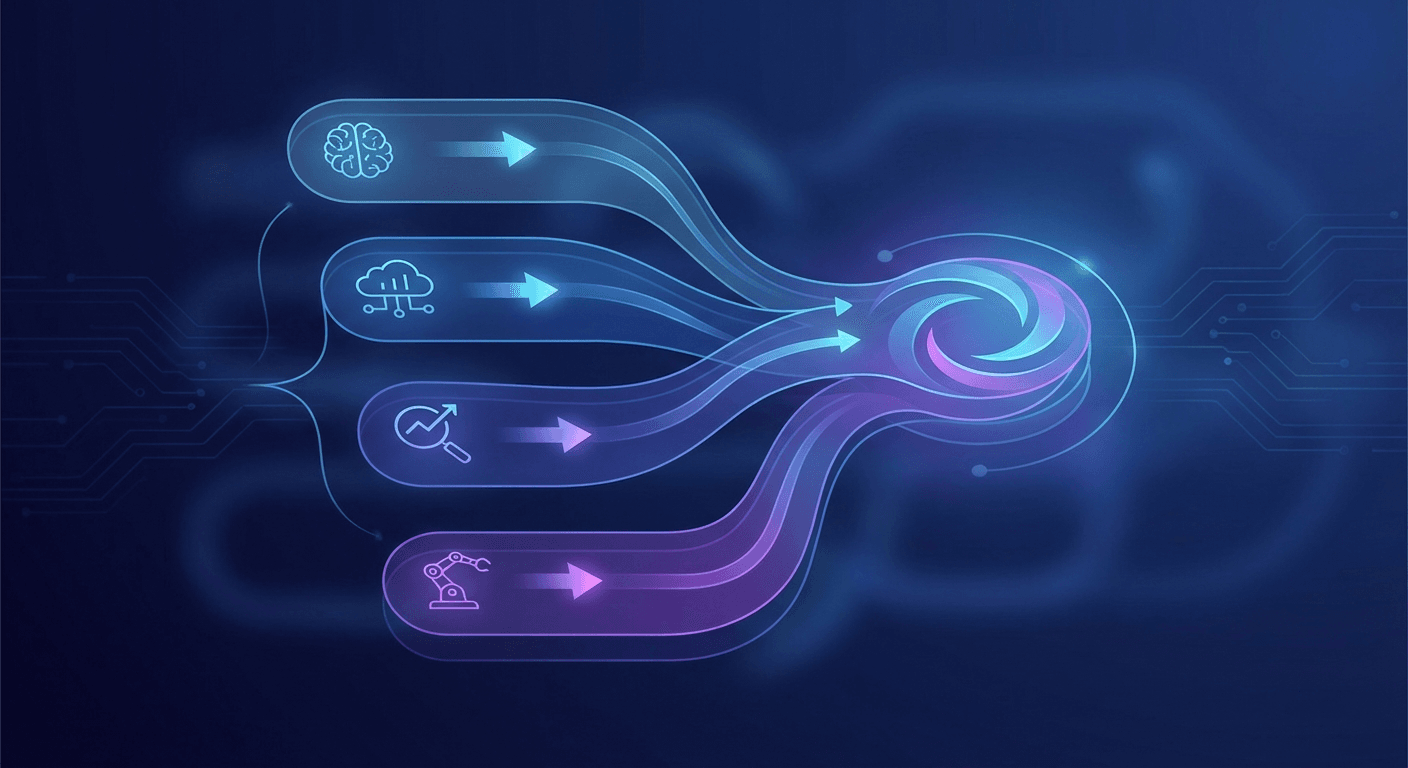
Composite AI refers to the strategic combination of multiple AI approaches within unified workflows. Rather than relying solely on large language models or traditional machine learning, composite AI blends generative AI (for content creation and creative tasks), prescriptive AI (for optimization and recommendation), predictive AI (for forecasting and pattern recognition), and agentic AI (for autonomous decision-making and action). This multi-modal approach addresses one of the critical limitations of pure generative AI: the lack of explainability and reliability in high-stakes business decisions.
IDC’s research shows that organizations using composite AI achieve significantly better outcomes than those relying on any single AI approach. By combining the creative power of generative models with the precision of predictive analytics and the accountability of prescriptive systems, enterprises can build AI solutions that are both innovative and trustworthy. This is particularly important in regulated industries like financial services and healthcare, where AI decisions must be explainable and auditable.
The evolution IDC maps is instructive: from manual processes to classic RPA bots, to virtual agents, to individual monolithic AI agents, and finally to fleets of composite AI agents. At each stage, the interaction, planning, decisioning, and action capabilities become more sophisticated, while human oversight transitions from direct involvement to strategic intercession. This progression represents a fundamental shift in how enterprises think about automation—not as a replacement for human judgment, but as an amplification of it.
Agentic AI and Workforce Transformation
One of the most provocative predictions in IDC FutureScape AI 2026 concerns the workforce: by 2026, 25% of all A2000 job roles will involve working with AI agents, redefining long-held traditional entry-, mid-, and senior-level positions. This isn’t a distant future scenario—it’s happening within the next year.
The implications cascade through every level of organizational design. AI skills needed to deploy agents are becoming mandatory across roles, not just for technical staff. Agents are changing the skills people need, transforming work practices, redefining jobs entirely, reshaping career trajectories, and even flattening organizational hierarchies. The traditional corporate ladder is being replaced by a more dynamic structure where human-agent collaboration determines value creation.
Perhaps the most striking prediction is that by 2029, at least 50 Asia-Pacific companies will be built predominantly using AI, with fewer than a dozen people, while generating over $1 billion in revenue each. This represents a paradigm shift in what a “company” means—from organizations defined by headcount and office space to entities defined by AI capability and orchestration skill. For the broader state of AI in enterprise, this signals a fundamental restructuring of economic activity.
For current enterprises, the workforce transformation message is clear: invest in AI literacy at every level, redesign roles around human-agent collaboration, and build organizational cultures that embrace continuous adaptation. Companies that treat AI agents as mere tools to be deployed by IT departments will lose ground to those that integrate them as core team members across the business.
AI Infrastructure Modernization Imperative
IDC FutureScape AI 2026 delivers a stark infrastructure warning: by 2028, the massive computational and data demands of AI will compel 75% of organizations to modernize legacy cloud environments by shifting to new platforms specifically designed for AI workloads. Current cloud infrastructure, designed primarily for web applications and traditional computing, is fundamentally insufficient for the demands of enterprise AI.
The report outlines a three-phase infrastructure evolution. The first phase (2024-2025) centered on AI assistants powered by large language models deployed across cloud and dedicated locations, with humans operating alongside AI assistants. The second phase (2025-2026) focuses on autonomous AI agents, requiring fit-for-purpose optimized infrastructure with an increasing range of AI workloads and growing agent autonomy, balanced against sovereign AI constraints. The third phase (2026-2027) envisions AI agent fleets operating on decentralized, connected, and resilient infrastructure, where agent-to-agent connections drive highly distributed computing requirements.
This infrastructure evolution has massive implications for IT budgets and strategy. Organizations must plan now for hybrid and edge infrastructure optimized for diverse AI workloads, not just centralized cloud computing. The shift from large-model-centric to fit-for-purpose optimized to decentralized architectures requires rethinking everything from data center investments to network topology to security models.
Transform complex AI reports into interactive experiences your team will actually engage with.
Sovereign AI and Data Governance
Sovereign AI emerges as a critical theme in IDC FutureScape AI 2026, reflecting growing concerns about data sovereignty, national security, and regulatory compliance in the age of artificial intelligence. As AI systems become more autonomous and handle increasingly sensitive data, governments and enterprises are demanding greater control over where AI models are trained, where data resides, and which jurisdictions govern AI decision-making.
The sovereign AI movement intersects with the broader EU AI Act regulation landscape, where policymakers are establishing frameworks to ensure AI systems respect national boundaries and citizen rights. For Asia-Pacific organizations, sovereign AI considerations add a layer of complexity to infrastructure decisions: AI agent autonomy must be balanced against regulatory requirements that may restrict cross-border data flows and model deployment.
IDC’s analysis suggests that sovereign AI will constrain the speed and scope of autonomous AI deployment in certain sectors and geographies. Organizations operating across multiple jurisdictions will need sophisticated governance frameworks that can adapt to varying regulatory requirements while still leveraging the benefits of AI agents and composite AI approaches. This creates opportunities for specialized governance tools, consulting services, and AI platforms designed with sovereignty as a core feature rather than an afterthought.
The data dimension is equally important. IDC FutureScape AI 2026 emphasizes that the relationship between data and AI is bidirectional: data feeds AI capabilities, and AI transforms how data is managed, discovered, and governed. Organizations that master this virtuous cycle—using AI to improve data quality while leveraging high-quality data to train better AI models—will have a significant competitive advantage.
AI Risk Management and Unified Governance
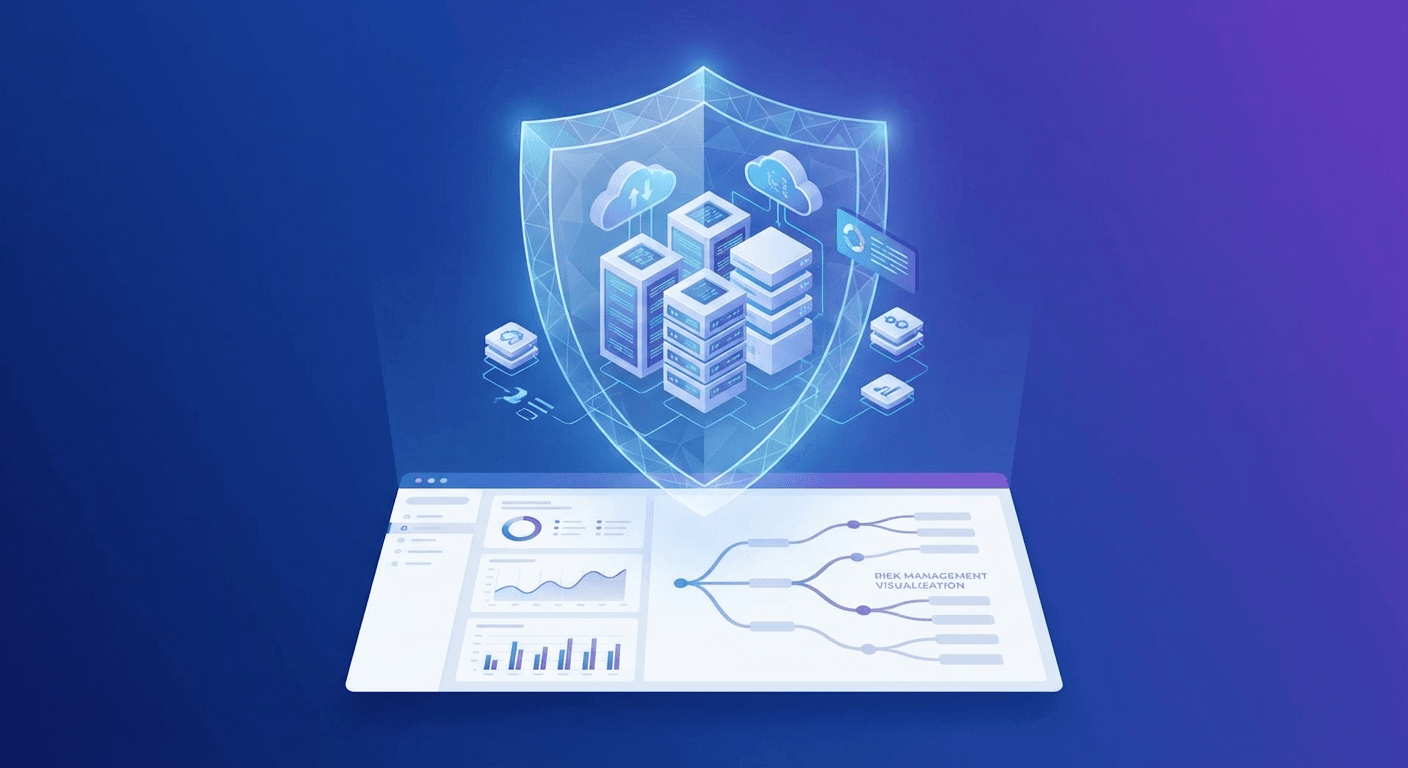
IDC FutureScape AI 2026 issues a clear warning about AI governance: alignment, trust, accountability, and control are essential to realizing value from AI agents. The report predicts that by 2027, 40% of Asia-Pacific enterprises will replace siloed AI oversight with unified, coordinated governance, enabling business units to lead with agentic AI and gain competitive advantage through faster innovation.
The consequences of inadequate governance are severe. IDC forecasts that by 2030, 15% of A1000 organizations will face lawsuits, substantial fines, and CIO dismissals because of high-profile disruptions stemming from inadequate controls and governance of AI agents. This is not a theoretical risk—as AI agents gain autonomy and make decisions with real-world consequences, the liability landscape is shifting dramatically.
The report recommends establishing dedicated AI GRC (Governance, Risk, and Compliance) teams working alongside AI Centers of Excellence. Key capabilities include building regulatory frameworks and AI protocols, implementing real-time risk monitoring and controls, maintaining autonomous audit trails, creating AI agent governance maps, and pursuing AI certification. These recommendations align with emerging frameworks like the NIST AI Risk Management Framework that provide structured approaches to AI governance.
For enterprises, the governance imperative means moving beyond ad-hoc AI ethics committees to establishing comprehensive governance structures that can scale with the pace of AI adoption. The organizations that build robust governance early will be best positioned to deploy AI agents aggressively while managing risk—a competitive advantage that compounds over time.
AI Opportunities Across Industries
IDC FutureScape AI 2026 identifies four major opportunity domains that will drive enterprise AI investment and innovation over the coming years. Each represents a multi-billion-dollar market opportunity with distinct technology requirements and competitive dynamics.
The first opportunity domain is consulting and managed services. As enterprises struggle to scale AI adoption, there is enormous demand for expert guidance in enterprise AI adoption and scaling, multi-sector digital transformation through autonomy, SME adoption and personalized automation support, AI agent partnerships and ecosystem building, SaaS and MSP model transformation, and industry-wide automation and orchestration solutions. Firms like Deloitte and McKinsey are rapidly building AI consulting practices to capture this demand.
The second domain focuses on data tools and platforms. Key opportunities include autonomous data pipelines that self-optimize, real-time data orchestration across distributed environments, multi-source integration capabilities, AI-driven data governance and discovery, agentic AI-enhanced data discovery, and scalable data platforms designed for AI-first workloads. The data infrastructure market is being fundamentally reshaped by AI requirements.
The third domain is AI operations and infrastructure. Opportunities include autonomous and adaptive operations, real-time incident prevention, multi-agent coordination optimized on cloud infrastructure, AI-driven automation of complex workflows, edge-to-cloud orchestration, and data center certifications for AI workloads. This domain will absorb significant enterprise IT spending as organizations modernize for AI.
The fourth domain addresses AI GRC (Governance, Risk, and Compliance). Building regulatory frameworks, real-time risk monitoring, autonomous audit trails, AI agent governance mapping, and AI certification represent growing market opportunities as governance requirements intensify.
See how leading organizations turn industry reports into engaging interactive experiences.
From AI Assistants to Agent Fleets: The Evolution Timeline
One of the most valuable frameworks in IDC FutureScape AI 2026 is its three-stage evolution timeline for enterprise AI deployment. Understanding this progression is essential for strategic planning and investment timing.
Stage 1: AI Assistants (2024-2025) is characterized by large-model-centric deployments. Large language models are deployed across cloud and dedicated locations to support rapid innovation. Human operations work with AI assistants in a collaborative mode. This is where most enterprises are today—experimenting with copilots, chatbots, and AI-enhanced productivity tools.
Stage 2: Autonomous AI Agents (2025-2026) represents a significant leap. Infrastructure becomes fit-for-purpose optimized for an increasing range of AI workloads. AI agent autonomy grows substantially, with agents capable of independent planning, decision-making, and action. However, this autonomy is constrained by sovereign AI requirements and governance frameworks. Hybrid to edge infrastructure is optimized for specific workloads rather than general-purpose computing.
Stage 3: AI Agent Fleets (2026-2027) is the transformative end-state. Agent-to-agent connections drive highly distributed infrastructure requirements. Decentralized, connected, and resilient architectures replace centralized cloud models. Human oversight shifts from operational involvement to strategic governance, with AI agents handling routine decision-making autonomously.
This evolution has profound implications for enterprise architecture, skills development, and organizational design. Companies should be planning now for Stage 3 capabilities, even as they optimize Stage 2 deployments. The organizations that successfully navigate this transition will define competitive dynamics in their industries for years to come. Understanding these shifts in the context of broader technology trends helps enterprise leaders make informed investment decisions.
Data Platforms and AI Operations
IDC FutureScape AI 2026 emphasizes a critical and often underestimated dimension of enterprise AI: the foundational role of data platforms and AI operations (AIOps) in enabling everything from composite AI to autonomous agent fleets. Without robust data infrastructure, even the most sophisticated AI models will fail to deliver business value.
The report identifies autonomous data pipelines as a key enabler. These self-optimizing systems automatically manage data ingestion, transformation, quality assurance, and delivery—freeing data engineering teams to focus on strategic initiatives rather than maintenance. Real-time data orchestration across distributed environments ensures that AI agents have access to current, relevant data regardless of where it resides.
Multi-source integration capabilities are becoming table stakes for enterprise AI. As organizations deploy composite AI that combines generative, predictive, prescriptive, and agentic approaches, each component requires access to different data types and sources. Unified data platforms that can seamlessly integrate structured and unstructured data from internal and external sources are essential.
On the operations side, IDC predicts a shift toward autonomous and adaptive operations—AIOps systems that not only detect and respond to incidents but proactively prevent them. Real-time incident prevention powered by AI agents that monitor system health, predict failures, and automatically implement remediation will replace reactive operations models. Multi-agent coordination optimized for cloud infrastructure will become the standard operational paradigm.
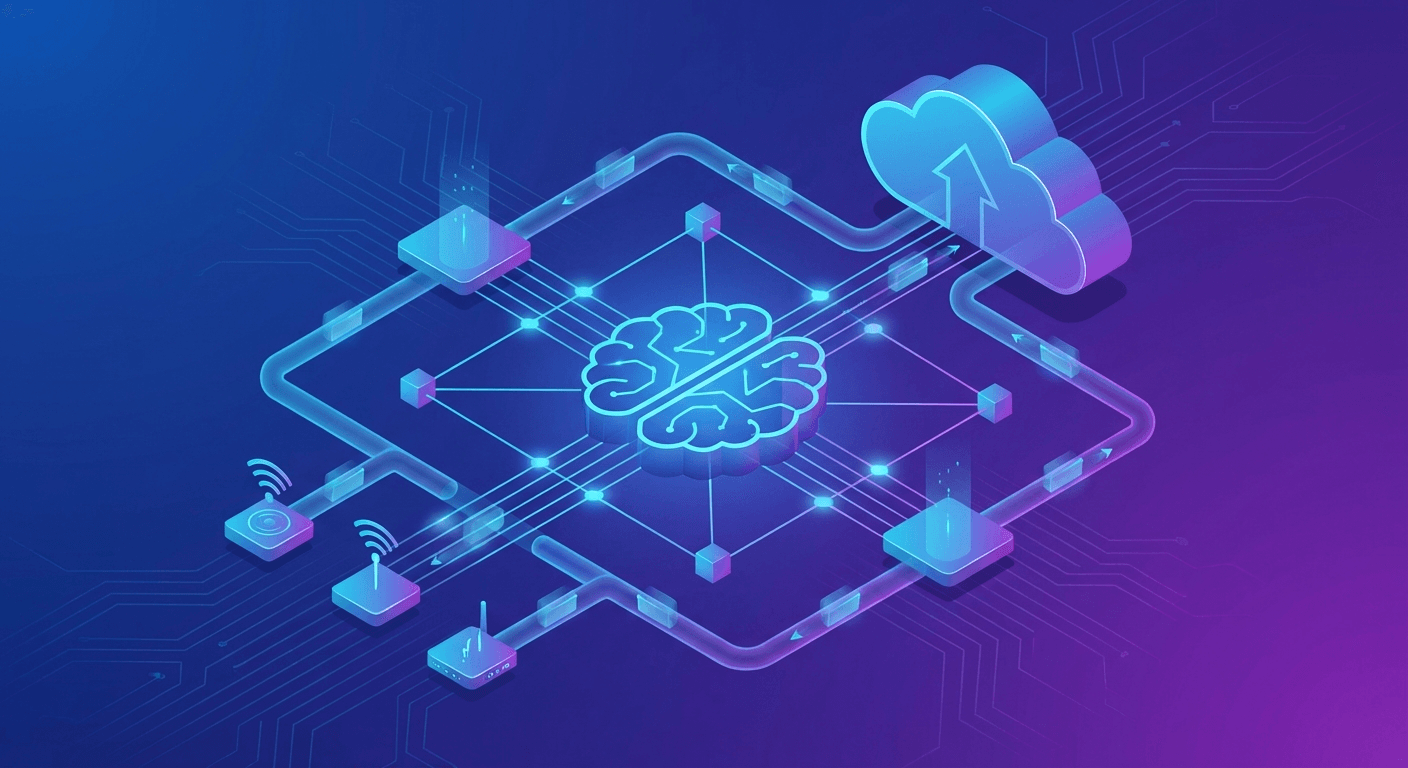
Edge-to-cloud orchestration represents another critical capability. As AI workloads become more distributed—with inference happening at the edge, training in the cloud, and governance spanning both—organizations need orchestration platforms that can manage this complexity seamlessly. The IDC predictions align with broader trends in enterprise cybersecurity frameworks that emphasize the need for integrated, adaptive security across distributed environments.
Strategic Recommendations for Enterprise Leaders
Based on the IDC FutureScape AI 2026 analysis, enterprise leaders should consider several strategic priorities to position their organizations for the agentic AI era.
Build composite AI capabilities now. Rather than investing heavily in any single AI approach, develop the ability to combine generative, predictive, prescriptive, and agentic technologies. This requires both technical infrastructure and organizational skills. Start with pilot projects that blend at least two AI approaches, then expand to full composite AI workflows.
Redesign roles for human-agent collaboration. With 25% of job roles set to involve AI agents by 2026, waiting to address workforce transformation is not an option. Conduct role-by-role assessments to identify where AI agents can augment human capabilities, redesign career pathways that incorporate AI literacy, and build training programs that emphasize collaboration rather than competition with AI.
Invest in AI-optimized infrastructure. The 75% infrastructure modernization prediction should drive immediate infrastructure strategy reviews. Assess current cloud environments against AI workload requirements, plan hybrid and edge deployments for distributed AI operations, and budget for the significant capital expenditure required to modernize.
Establish unified AI governance. Replace siloed AI oversight with coordinated governance structures that enable business units to innovate with AI while managing risk. Build AI GRC teams, implement real-time monitoring, establish audit trails, and pursue relevant certifications. The cost of governance failures—lawsuits, fines, executive dismissals—far exceeds the investment in proper oversight.
Plan for sovereign AI requirements. Map your AI operations against current and anticipated regulatory requirements in every jurisdiction where you operate. Design data and model architectures that can comply with sovereignty requirements without sacrificing AI capability. Build regulatory monitoring into your AI governance framework.
Pursue AI opportunities strategically. The four opportunity domains IDC identifies—consulting, data platforms, AI operations, and AI GRC—each offer significant revenue potential. Assess which domains align with your organizational strengths and market position, and invest in building differentiated capabilities.
Ready to transform your strategic documents into interactive experiences? Start with Libertify today.
Frequently Asked Questions
What are the key IDC FutureScape AI 2026 predictions?
IDC FutureScape 2026 predicts that 65% of Asia-Pacific organizations will adopt composite AI by 2026, 25% of enterprise job roles will involve AI agents, 75% of organizations will modernize cloud infrastructure for AI by 2028, and 40% will replace siloed AI oversight with unified governance by 2027.
What is composite AI according to IDC?
Composite AI is IDC’s term for blending multiple AI approaches—generative, prescriptive, predictive, and agentic technologies—into unified workflows. This approach improves explainability and reliability compared to using any single AI method alone.
How will agentic AI transform the workforce by 2026?
IDC predicts 25% of all A2000 job roles will involve working with AI agents by 2026, redefining entry-, mid-, and senior-level positions. By 2029, at least 50 Asia-Pacific companies will operate with fewer than a dozen people while generating over $1 billion in revenue.
What AI governance risks does IDC FutureScape 2026 highlight?
IDC warns that by 2030, 15% of A1000 organizations will face lawsuits, fines, and CIO dismissals due to inadequate AI agent controls. The report recommends unified AI governance replacing siloed oversight, with 40% of enterprises expected to make this shift by 2027.



