Most advice on how to follow up on a proposal tells you the same thing: wait two to three days, send a light-touch email, then repeat across eight to twelve touchpoints. That approach treats every prospect identically, regardless of what they actually did with your proposal.
A prospect who spent 11 minutes on your pricing section and forwarded the document to their CFO is not the same as one who opened it for six seconds. Following up on a calendar ignores that difference. Following up on behavior does not.
Why calendar-based follow-up fails
Calendar sequences produce two failure modes. First, you follow up too early — before the prospect has read anything and come across as pressure. Second, you wait five days while a prospect who opened the proposal three times on day two is actively building an internal business case and hears nothing from you.
Furthermore, a calendar gives you no signal about what to say. A follow-up that asks “did you get a chance to review?” adds nothing. It tells the prospect you have zero visibility into what they did, and it makes the conversation feel like a chore rather than a next step.
Six signals to follow up on instead
1. They opened it within the hour
A prospect who opens a proposal within 60 minutes is in active evaluation mode. Follow up the same day, not to ask if they reviewed it, but to offer a specific next step. “Happy to walk through the pricing section if that’s useful” lands because it’s timely and concrete.
2. They spent significant time on pricing
Time on the pricing section is the strongest post-send buying signal. A prospect who spent four or more minutes there isn’t confused; they’re building a business case. Consequently, follow up by addressing the number directly: break down what’s included, share a relevant customer outcome, or clarify the implementation timeline if budget is the concern.
3. They re-opened the proposal after a gap
One open is curiosity. A return visit two or three days later, especially to the same section, means internal conversations have resumed. Follow up the same business day. The prospect is actively thinking about your offer right now, so reach them while that’s true.
4. They forwarded it to a new stakeholder
A forward means your proposal moved up the decision chain. As a result, your immediate priority is finding out who received it. A message like “looks like a few more people on your team had a chance to see the proposal — happy to set up a call if it helps to walk everyone through it together” opens that conversation naturally.
5. They asked questions inside the document
If your document includes an AI assistant layer, the questions your prospect asks reveal the exact objection forming in their mind before they voice it to you. Follow up by addressing those questions directly. A rep who says “I noticed a few questions came up around implementation — here’s how we handle that” closes the gap between what the prospect was thinking and what they were willing to send as an email.
6. They barely opened it
A six-second open is not a read. Instead of following up with the same proposal, send a shorter version — a one-page summary or a three-slide deck that leads with the outcome they care most about. The document told you something important: it was too long, too detailed, or built for the wrong reader.
What every behavior-based follow-up needs
Regardless of the signal, every strong follow-up on a proposal does three things.
First, it references where the prospect is in their evaluation, not explicitly, but in a way that shows you know. “Happy to walk through the pricing section” signals awareness without being surveillance.
Second, it adds something new. A follow-up that repeats the proposal is noise. One that brings a case study, a specific answer, or a clearer path to the next step earns a reply.
Third, it makes the next step concrete. Not “let me know if you have questions,” but “I have 30 minutes Thursday at 2pm if you’d like to walk through it together.” Specificity converts.
The tool question
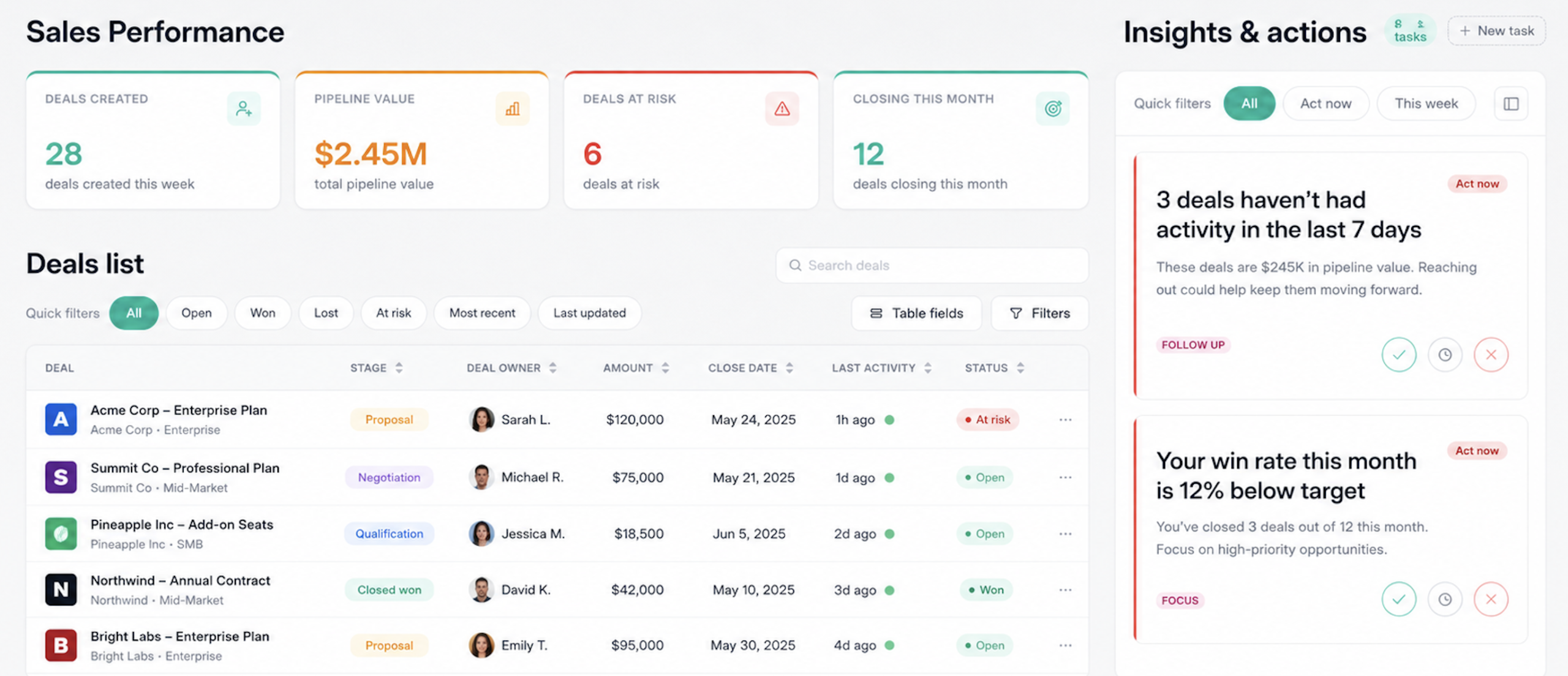
To follow up on behavior rather than a calendar, you need visibility into what happened inside the proposal after you sent it. Basic tools like DocSend and PandaDoc cover opens, time-on-page, and forwards, which is enough to act on the first four signals above.
For reader questions and comprehension gaps, Libertify adds the layer that standard tracking misses. It sits on top of any PDF, PowerPoint, or Word doc you already send, captures what readers asked and where they dropped off, and tells you what to do next. See how sales teams and consulting firms put it to work in the Libertify success stories and explore the full range of workflows at libertify.com/use-cases/.
Frequently asked questions
When should you follow up on a proposal?
Follow up when the data tells you to. A prospect who opens a proposal within the hour warrants a same-day follow-up. A return visit after a three-day gap means they’re actively re-evaluating, so reach out the same business day. No engagement after five days usually means the proposal needs to be shorter, not that the follow-up needs to be louder.
How many times should you follow up on a proposal?
As many times as the signals justify. If a prospect keeps re-engaging — opening the document, returning to sections, forwarding to colleagues — they’re still in evaluation and deserve follow-up. If there’s been no engagement after two or three attempts, the proposal is the problem, not the cadence.
What should you say when following up on a proposal?
Reference where the prospect is in their evaluation, add something new, and make the next step concrete. Avoid generic check-ins that simply ask if they reviewed it — those signal that you have no visibility into what they actually did.
What does it mean when a prospect re-opens a proposal multiple times?
Return visits, especially to pricing or scope sections, typically mean internal conversations are happening. It’s one of the strongest post-send signals that a deal is progressing. Follow up the same day.
What is the best tool for following up on proposals?
Any document tracking tool gives you open and time-on-page data that improves follow-up timing. For comprehension-level signals — what readers asked, where they dropped off, which objection is forming — Libertify adds the layer that standard tracking doesn’t cover.
Stop following up on a timer
Your next proposal already tells you when to reach out and what to say. Upload it to Libertify and see your first reader signals in about three minutes. Start with Libertify →