
—
0:00
Chevron Annual Report 2024: The Complete Financial and Strategic Analysis
Table of Contents
- Chevron 2024 Annual Report Executive Summary
- Financial Performance: Revenue, Earnings, and Cash Flow
- Record Production: 3.3 Million Barrels Per Day
- Gulf of America: Deepwater Innovation and Expansion
- Shareholder Returns: Record $27 Billion Returned
- Chevron Energy Transition and Lower Carbon Strategy
- Global Operations and Strategic Portfolio Moves
- Downstream Operations and Refining Performance
- Commodity Outlook and Market Positioning
- Investment Thesis: Chevron Stock Analysis 2024
📌 Key Takeaways
- Record production of 3.3M boe/day — a 7% increase driven by Permian Basin all-time highs of 921,000 boe/day and new project ramp-ups
- $27 billion returned to stockholders — the highest in company history, with $15.2B in buybacks and 37th consecutive annual dividend increase
- Net income of $17.7 billion — on $193.4B revenue, with 10.1% return on capital employed and a conservative 13.9% debt ratio
- Deepwater breakthrough at Anchor — first-ever 20,000 PSI high-pressure deepwater technology, targeting 300,000 boe/day Gulf production by 2026
- $10 billion lower carbon investment plan — through 2028 covering renewable fuels, hydrogen, carbon capture, with 700,000 tonnes CO2e abated annually
Chevron 2024 Annual Report Executive Summary
The Chevron 2024 Annual Report reveals a company executing with remarkable discipline across every dimension of its strategy. In a year when global energy demand set record highs — oil consumption reached an estimated 103 million barrels per day and natural gas demand hit 4.2 trillion cubic meters — Chevron delivered record production, record shareholder returns, and continued progress on its lower carbon ambitions.
Under Chairman and CEO Mike Wirth’s leadership, Chevron’s strategy remains consistent: leverage world-class assets, operational capabilities, and customer relationships to safely deliver lower carbon energy to a growing world. The 2024 results demonstrate this strategy’s effectiveness — the company achieved its highest-ever production while maintaining a strong balance sheet and returning more cash to stockholders than at any point in its history.
For investors analyzing the Chevron annual report 2024, the narrative is one of profitable growth, capital discipline, and strategic optionality. With $256.9 billion in total assets, operations spanning more than 20 countries, and 9.8 billion barrels of proved reserves, Chevron remains one of the world’s premier integrated energy companies. This comprehensive analysis breaks down every critical aspect of the report to help investors, analysts, and energy professionals understand where Chevron stands and where it’s heading.
Financial Performance: Revenue, Earnings, and Cash Flow
Chevron’s financial results in 2024 reflect a normalized operating environment compared to the extraordinary commodity price spikes of 2022. Net income attributable to Chevron Corporation totaled $17.7 billion, down from $21.4 billion in 2023 and $35.5 billion in the record year of 2022. This decline primarily reflects lower commodity prices — Brent crude averaged $81 per barrel versus $83 in 2023, while U.S. Henry Hub natural gas averaged $2.25 per MCF compared to $2.56.
Sales and other operating revenues totaled $193.4 billion, a modest decline from $196.9 billion in 2023. Diluted earnings per share came in at $9.72, compared to $11.36 in 2023 and $18.28 in 2022. Despite the earnings decline, the company’s operational execution generated strong cash flow from operations of $31.5 billion, providing ample capacity for both reinvestment and shareholder returns.
Capital expenditures increased to $16.4 billion from $15.8 billion in 2023, reflecting disciplined investment in growth projects — particularly the Permian Basin, Gulf of America deepwater, and the Kazakhstan Future Growth Project. Return on capital employed was 10.1%, while return on stockholders’ equity reached 11.3%. The debt ratio of 13.9% and net debt ratio of 10.4% remain well below historical averages, providing financial flexibility to navigate volatility.
In the fourth quarter of 2024, Chevron announced plans to achieve $2-3 billion in structural cost reductions by end of 2026 through portfolio optimization, technology-driven productivity gains, and expanded use of global capability centers. A $715 million after-tax restructuring charge was recognized in Q4, with associated cash outflows anticipated over the following two years. For broader context on corporate financial performance analysis, see our Berkshire Hathaway Annual Report 2024 guide.
Record Production: 3.3 Million Barrels Per Day
The headline operational achievement in the Chevron annual report 2024 is record production of 3.3 million net barrels of oil-equivalent per day, a 7% increase from 2023. This growth was driven by the full-year contribution of legacy PDC Energy production (acquired in 2023) and exceptional performance in the Permian Basin.
Permian Basin production averaged an all-time high of 921,000 net boe/day, representing a nearly 18% increase from 2023 and accounting for more than half of Chevron’s total U.S. production of nearly 1.6 million net boe/day. The company expects Permian production to reach the milestone 1 million boe/day mark in 2025 — a target that seemed distant just a few years ago.
Net crude oil and condensate production reached 1.56 million barrels per day, while natural gas liquids production increased to 415,000 barrels per day from 333,000 in 2023 — a 25% jump. Natural gas production reached 8.2 billion cubic feet per day. The company estimates 2025 net oil-equivalent production will increase 6-8% over 2024, assuming Brent crude at $70 per barrel and excluding expected asset sales.
However, proved reserves declined to 9.8 billion barrels of oil-equivalent from 11.1 billion in 2023, with a negative 4% reserve replacement ratio in 2024. The 5-year and 10-year reserve replacement ratios of 72% and 88% respectively suggest the company is drawing down reserves faster than replenishing them, though the pending Hess merger would significantly alter this picture. For a deeper understanding of energy sector dynamics, explore our IEA World Energy Outlook 2025 analysis.
Transform complex annual reports into interactive experiences your investment team will actually engage with.
Gulf of America: Deepwater Innovation and Expansion
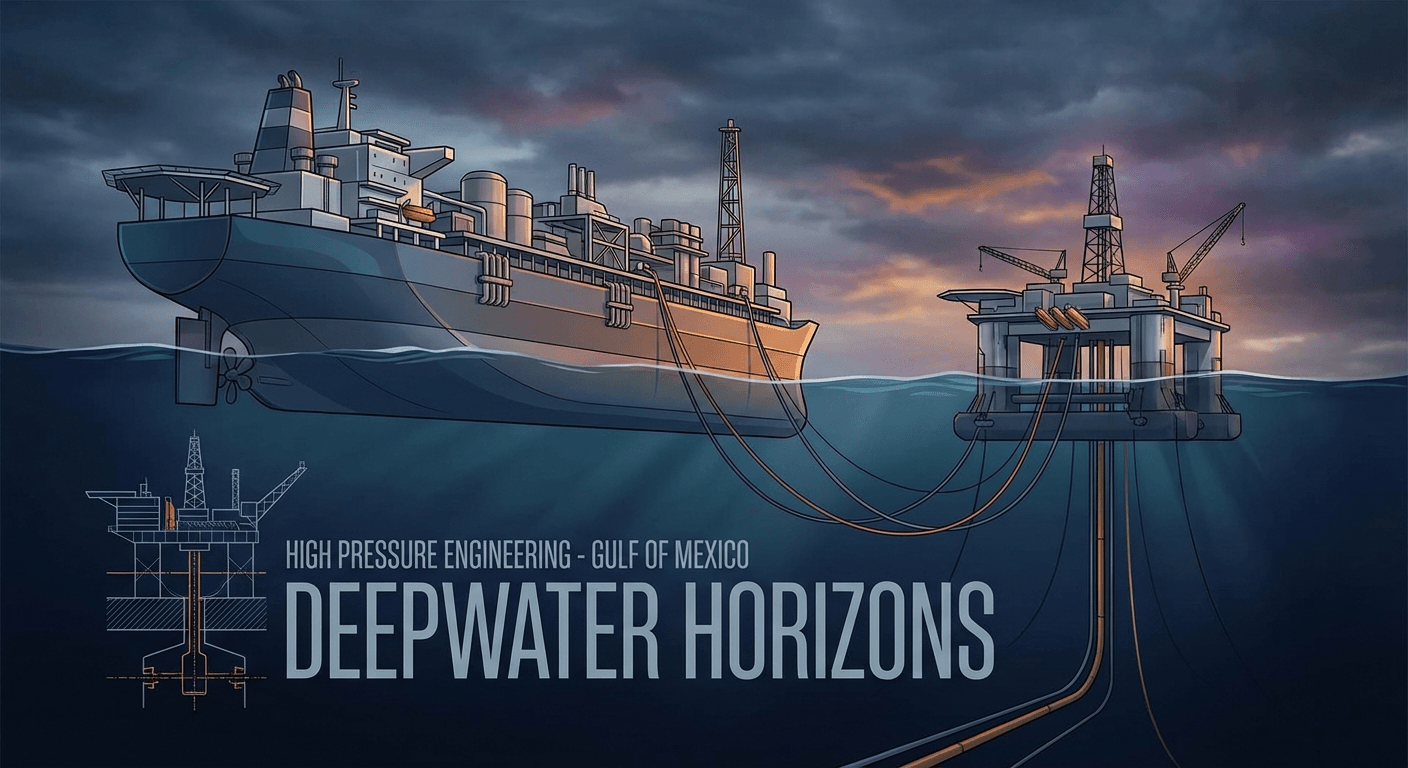
Chevron’s Gulf of America operations represent some of the most technologically advanced offshore production in the world. The 2024 milestone achievement was first oil from the Anchor platform, the first deployment of deepwater high-pressure technology capable of safely operating at up to 20,000 pounds per square inch, with reservoir depths reaching 34,000 feet below sea level.
The Anchor floating production unit has a design capacity of 75,000 gross barrels of oil per day and 28 million gross cubic feet of natural gas per day. This breakthrough technology unlocks resources that were previously inaccessible, opening new frontiers in deepwater production. In January 2025, Chevron also started production from the Whale semi-submersible platform, further expanding its Gulf presence.
Additional deepwater achievements in 2024 include first water injection at the St. Malo field — Chevron’s first waterflood project in the deepwater Wilcox trend, expected to add approximately 175 million barrels of oil-equivalent to gross ultimate recovery — and expanded waterflood operations at Tahiti, which recently surpassed 500 million gross barrels of cumulative production. The combined Gulf of America assets are projected to reach 300,000 boe/day net production in 2026.
Chevron maintains more than 2 million gross acres of leases in the Gulf, making it one of the region’s largest leaseholders. With 17 gross wells added in 2024 and platforms including Big Foot, Blind Faith, Petronius, and Jack/St. Malo, the company has built an unrivaled deepwater portfolio that combines high productivity with relatively low carbon intensity compared to other oil-producing regions.
Shareholder Returns: Record $27 Billion Returned
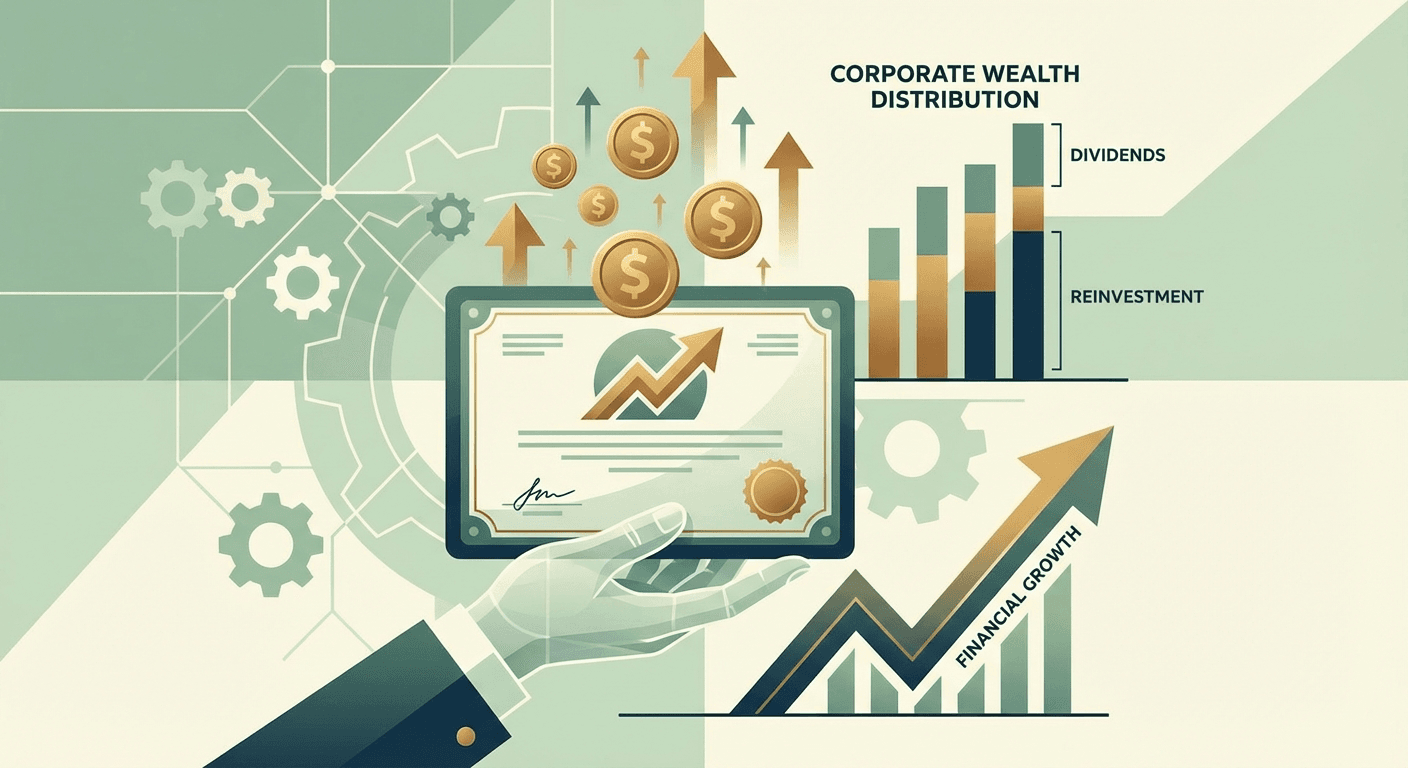
Chevron’s capital allocation priorities place shareholder returns at the center of its strategy, and 2024 delivered on this commitment at a record level. The company returned $27 billion to stockholders — $15.2 billion through share repurchases and $11.8 billion through dividends. This extends Chevron’s track record of repurchasing shares to 17 of the past 21 years.
The dividend story is particularly compelling. 2024 marked the 37th consecutive year of higher annual per-share dividend payouts — one of the longest streaks among major corporations. In January 2025, Chevron raised the quarterly dividend 5% to $1.71 per share ($6.84 annualized), representing a compound annual growth rate of 6.2% since 2009. The indexed dividend growth from a 2009 base of 100 now exceeds 300.
Common shares outstanding decreased to 1.755 billion from 1.851 billion in 2023, a 5.2% reduction that directly increases per-share metrics for remaining shareholders. At year-end 2024, Chevron Corporation stockholders’ equity stood at $152.3 billion, or $86.80 per share — essentially flat with 2023 despite the massive buyback program, reflecting the company’s continued generation of value.
The stock performance data shows five-year cumulative total returns of $225 per $100 invested (versus $197 for the S&P 500), though one-year returns of 1.4% lagged the S&P 500’s 25% gain. This underperformance reflects the broader market’s rotation toward technology stocks, but Chevron’s consistent income generation through dividends continues to attract income-oriented investors.
Make financial data engaging — turn dense annual reports into interactive experiences investors will explore.
Chevron Energy Transition and Lower Carbon Strategy
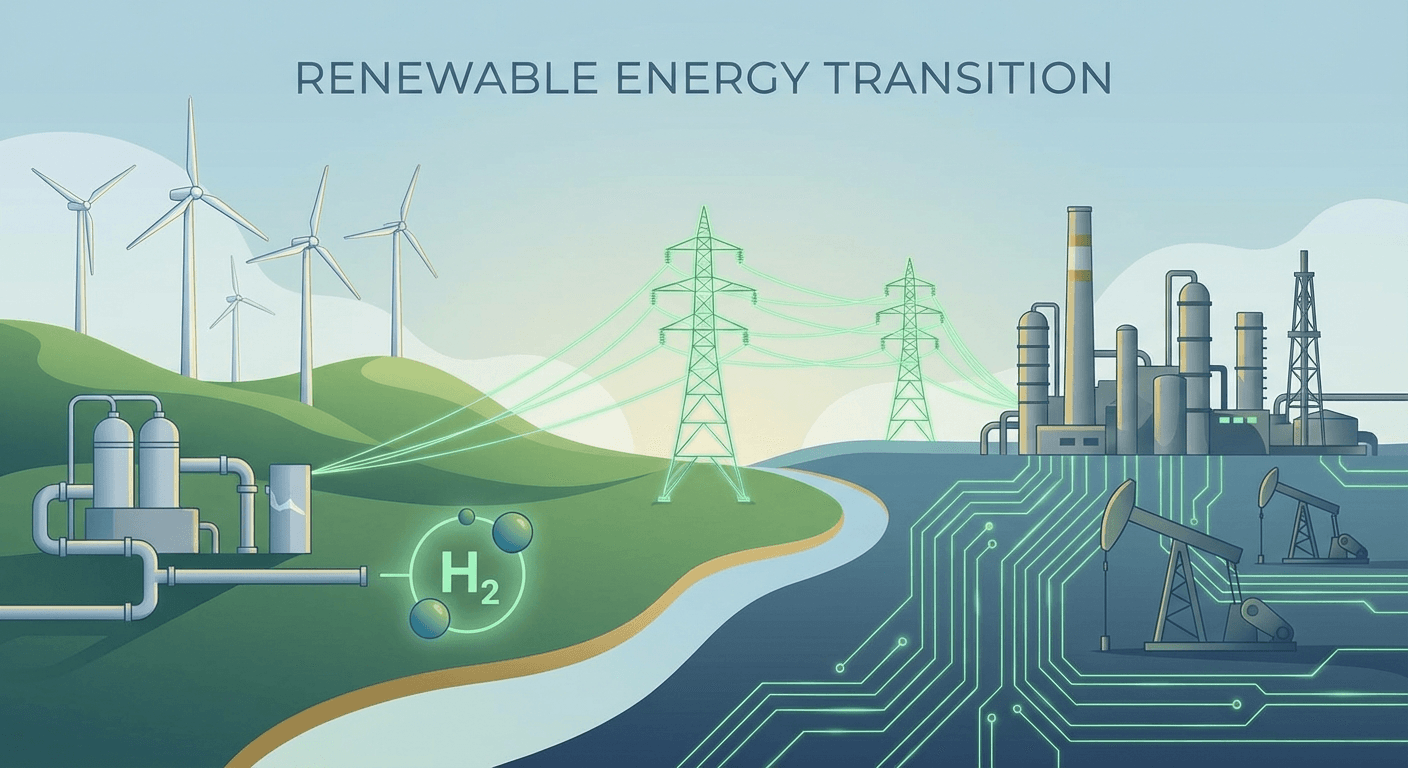
Chevron’s approach to the energy transition combines pragmatism with ambition. The company has committed approximately $10 billion in lower carbon capital spending through 2028, split between $2 billion to reduce operational carbon intensity and $8 billion in new business investments across renewable fuels, hydrogen, carbon capture, and offsets. Through 2024, the company has already spent $7.7 billion, including $2.9 billion for the REG acquisition.
In 2024, Chevron completed projects and operational changes designed to abate over 700,000 tonnes of carbon dioxide-equivalent annually from its operations. Key initiatives include the expansion of the Geismar, Louisiana biorefinery from 7,000 to 22,000 barrels per day of renewable diesel capacity (expected to start up in 2025) and construction of an oilseed processing plant through the Bunge Chevron Ag Renewables joint venture.
The company’s 2028 upstream production GHG intensity targets include oil production at 24 kg CO2e/boe, gas production at 24 kg CO2e/boe, methane intensity at 2 kg CO2e/boe, and flaring GHG intensity at 3 kg CO2e/boe. Since 2016, Chevron has reduced upstream methane intensity by more than 60% through deployment of advanced detection technologies including ground sensors, airborne sensors, and satellites.
A particularly notable development is Chevron’s January 2025 partnership to develop scalable power solutions for U.S. data centers using natural gas, with flexible designs potentially incorporating CCUS, renewables, or other lower carbon enhancements. This positions Chevron at the intersection of two mega-trends: the AI-driven explosion in data center energy demand and the transition to lower carbon power sources. The International Energy Agency projects continued record global energy demand, making Chevron’s dual strategy of growing traditional energy while building lower carbon businesses highly relevant.
Global Operations and Strategic Portfolio Moves
Chevron’s 2024 portfolio optimization was aggressive and decisive. The company sold its Athabasca Oil Sands and Duvernay shale assets in Canada for $6.5 billion, withdrew from Myanmar, sold Congo assets in early 2025, and is targeting $10-15 billion in total asset sales through 2028 — having already generated approximately $8 billion by January 2025.
The standout international story is Kazakhstan’s Tengizchevroil (TCO), Chevron’s 50%-owned affiliate. TCO completed the Wellhead Pressure Management Project (WPMP) in April 2024, and in January 2025 started oil production at the Future Growth Project (FGP), designed to add 260,000 barrels per day and ramp total output to 1 million boe/day. This single project represents one of the largest production additions in the global oil industry.
Exploration activity expanded significantly, with new positions added in Australia, Angola, Brazil, Equatorial Guinea, Namibia, and Uruguay. The company secured 15 exploration blocks in Brazil’s South Santos and Pelotas Basins, signed agreements for two offshore blocks in Equatorial Guinea, and acquired an 80% working interest in Namibia’s Walvis Basin. The 70-year Angola partnership was celebrated with first gas at the Sanha Lean Gas Connection project.
The pending Hess Corporation merger continued to advance, securing both Hess stockholder approval and Federal Trade Commission antitrust clearance. However, ongoing arbitration proceedings regarding preemptive rights in the Stabroek Block joint operating agreement remain a key uncertainty. Chevron maintains confidence that arbitration will confirm Hess’ position. For related analysis on major corporate financial strategies, see our IMF World Economic Outlook 2025 coverage.
Downstream Operations and Refining Performance
Chevron’s downstream segment reported earnings of $1.7 billion in 2024, down significantly from $6.1 billion in 2023 — reflecting the normalization of refining margins from the elevated levels that characterized the post-pandemic period. Despite the margin compression, the downstream business continued to operate efficiently with refinery crude oil input of 1.56 million barrels per day and refined product sales of 2.78 million barrels per day.
A key operational milestone was the completion of a retrofit at the Pasadena, Texas refinery, enabling increased processing of equity Permian Basin crude, greater product supply to Gulf Coast customers, and synergies with the Pascagoula, Mississippi refinery. This integration of upstream production with downstream processing capacity is a hallmark of Chevron’s integrated business model.
Chevron’s renewable fuels business, anchored by the 2022 acquisition of Renewable Energy Group (REG), continues to generate substantial value through carbon credit generation under programs like the Renewable Fuel Standard and California’s Low Carbon Fuel Standard. The company is one of the largest renewable fuels producers in the United States, with the Geismar expansion expected to triple renewable diesel capacity.
Commodity Outlook and Market Positioning
The commodity price environment remains central to Chevron’s earnings trajectory. Brent crude averaged $81 per barrel in 2024 and was at $75 as of mid-February 2025, influenced by geopolitical conflict, OPEC+ supply restraint, and offsetting factors including non-OPEC supply growth and moderating demand growth. Henry Hub natural gas averaged $2.25/MCF in 2024 but had recovered to $4.42 by mid-February 2025.
Chevron’s upstream earnings remain closely aligned with crude oil prices, with the majority of equity production priced on the Brent benchmark. The company notes that OPEC+ production quotas, geopolitical risks (particularly Russia-Ukraine, Middle East conflicts), and the pace of energy transition all create significant uncertainty for future commodity prices.
The tariff environment adds additional uncertainty. February 2025 U.S. tariff announcements on imports from several trade partners could impact supply chains and costs, though Chevron indicates the financial impacts are currently not expected to be material. The company has addressed cost pressures through fixed-price contracts, volume commitments, standardization, and scope optimization with suppliers.
Investment Thesis: Chevron Stock Analysis 2024
For investors evaluating Chevron (CVX), the 2024 annual report presents a clear investment narrative. The bull case rests on: record and growing production (6-8% expected growth in 2025), a 37-year dividend growth streak with 6.2% CAGR, the transformative TCO FGP ramp-up adding 260,000 bpd, the pending Hess merger which would add world-class Guyana assets, and a $2-3 billion structural cost reduction program.
The risk factors include: commodity price sensitivity (a $1/bbl Brent change significantly impacts upstream earnings), declining reserve replacement ratios that need addressing, the uncertain outcome of Hess arbitration proceedings, geopolitical risks across multiple operating regions (Kazakhstan, Israel, Venezuela, Bangladesh), and the long-term structural challenge of energy transition potentially stranding assets.
At $86.80 per share of stockholders’ equity and a 13.9% debt ratio, the balance sheet provides substantial downside protection. The company’s ability to generate $31.5 billion in operating cash flow even in a moderate commodity price environment (Brent ~$81) demonstrates the earnings power of its portfolio. The combination of disciplined capital allocation, operational excellence, and strategic optionality in energy transition positions Chevron as a core holding for investors seeking income, growth, and exposure to the global energy sector.
Industry observers tracking the SEC filings and quarterly updates should watch for the Hess arbitration resolution, TCO FGP production ramp-up progress, Permian Basin milestone achievement, and any changes to the lower carbon investment trajectory as key catalysts for the stock over the next 12-18 months.
Frequently Asked Questions
What were Chevron’s key financial results in 2024?
Chevron reported net income of $17.7 billion in 2024, with sales and other operating revenues of $193.4 billion. The company returned a record $27 billion to stockholders through $15.2 billion in share repurchases and $11.8 billion in dividends. Return on capital employed was 10.1% and the debt ratio stood at a conservative 13.9%.
How much oil did Chevron produce in 2024?
Chevron achieved record production of 3.3 million net barrels of oil-equivalent per day in 2024, a 7% increase from 2023. Permian Basin production hit an all-time high of 921,000 boe/day, nearly 18% higher than the prior year. The company expects Permian production to reach 1 million boe/day in 2025.
What is Chevron’s dividend history and shareholder return policy?
Chevron has increased its annual per-share dividend payout for 37 consecutive years. In January 2025, the quarterly dividend was raised 5% to $1.71 per share. In 2024, the company returned a record $27 billion to stockholders through dividends and share repurchases, extending its buyback track record to 17 of the past 21 years.
What is Chevron’s energy transition strategy?
Chevron plans approximately $10 billion in lower carbon investments through 2028, including renewable fuels, hydrogen, carbon capture and offsets. The company completed projects abating over 700,000 tonnes of CO2-equivalent annually, is expanding its Geismar biorefinery to 22,000 bpd renewable diesel capacity, and is developing data center power solutions using natural gas with potential CCUS integration.
What are Chevron’s major growth projects?
Key growth projects include the Anchor platform in the Gulf of America (first deepwater 20K PSI technology), the TCO Future Growth Project in Kazakhstan (adding 260,000 bpd), Permian Basin expansion toward 1M boe/day, the pending Hess Corporation merger, and multiple exploration additions in Brazil, Namibia, Angola, and Australia.



