
—
0:00
Berkshire Hathaway 2024 Shareholder Letter: Decoding Warren Buffett’s Key Insights
Table of Contents
- Warren Buffett’s 2024 Shareholder Letter Overview
- Berkshire Operating Earnings: $47.4 Billion Breakdown
- The Record-Breaking Tax Payment: $26.8 Billion
- GEICO’s Spectacular Turnaround
- Insurance Float: Berkshire’s $171 Billion Moat
- Japan Investments: Five Trading Companies
- Equity Portfolio Strategy and Cash Position
- The Pete Liegl Story and Manager Selection
- CEO Succession: Greg Abel’s Rising Role
- Berkshire Hathaway 60-Year Performance Record
📌 Key Takeaways
- $47.4 billion operating earnings — a 27% increase from 2023, led by insurance underwriting and investment income improvement
- Record $26.8B federal tax payment — about 5% of all corporate America’s taxes, fueled by 60 years of continuous reinvestment
- Insurance float reached $171 billion — up from $46B two decades ago, with $32B in cumulative after-tax underwriting profits
- Japan investments worth $23.5B — on $13.8B cost basis, with $812M expected annual dividend income versus $135M yen debt interest
- 5,502,284% overall gain since 1964 — compared to 39,054% for the S&P 500 with dividends reinvested, a 19.9% compounded annual return
Warren Buffett’s 2024 Berkshire Hathaway Shareholder Letter Overview
Warren Buffett’s 2024 Berkshire Hathaway shareholder letter carries a tone of reflection, gratitude, and characteristically candid self-assessment. Written at age 94, Buffett acknowledges that Greg Abel will “soon” replace him as CEO and letter writer — a signal that the transition is no longer distant but imminent. Yet the letter’s substance demonstrates why the Oracle of Omaha remains the most respected voice in global investing.
The 2024 letter covers extraordinary financial results — $47.4 billion in operating earnings, a record $26.8 billion in federal income taxes, and the continuation of a 60-year track record that has turned every $100 invested in 1964 into more than $5.5 million. But beyond the numbers, Buffett delivers his signature blend of investing wisdom, corporate governance philosophy, and American optimism that makes each annual letter essential reading for investors worldwide.
What makes the Berkshire Hathaway shareholder letter distinctive is its radical transparency. Buffett opens by noting he has used the words “mistake” or “error” 16 times in his letters from 2019-2023 — while many large companies have never used either word. This commitment to honesty, combined with the refusal to engage in “happy talk and pictures,” sets the standard for corporate communication. For investors seeking to understand value investing principles, capital allocation, and long-term wealth creation, this letter remains the definitive annual text.
Berkshire Operating Earnings: $47.4 Billion Breakdown
Berkshire’s operating earnings reached $47.4 billion in 2024, a substantial 27% increase from $37.4 billion in 2023. Buffett emphasizes this measure — which excludes capital gains or losses on stocks and bonds — rather than GAAP-mandated earnings that can swing wildly and unpredictably based on unrealized investment gains or losses.
The earnings breakdown reveals where Berkshire’s power lies:
| Business Segment | 2024 ($M) | 2023 ($M) |
|---|---|---|
| Insurance – Underwriting | $9,020 | $5,428 |
| Insurance – Investment Income | $13,670 | $9,567 |
| BNSF Railroad | $5,031 | $5,087 |
| Berkshire Hathaway Energy | $3,730 | $2,331 |
| Other Controlled Businesses | $13,072 | $13,362 |
| Non-Controlled Businesses | $1,519 | $1,750 |
| Other | $1,395 | ($175) |
| Total Operating Earnings | $47,437 | $37,350 |
Insurance drove the earnings surge, with combined underwriting and investment income reaching $22.7 billion — nearly half of all operating earnings. Investment income benefited from higher Treasury Bill yields and Berkshire’s substantial increase in short-term liquid securities holdings. Notably, 53% of Berkshire’s 189 operating businesses reported earnings declines, making the aggregate improvement even more remarkable. For comparison, see our analysis of the Chevron Annual Report 2024 for another major corporate performance review.
The Record-Breaking Tax Payment: $26.8 Billion
Perhaps the most striking revelation in the Berkshire Hathaway shareholder letter is the company’s record-shattering federal income tax payment of $26.8 billion — approximately 5% of what all of corporate America paid combined. Buffett frames this achievement as the culmination of 60 years of continuous reinvestment, noting that in 1965 Berkshire paid no income tax at all — “an embarrassment that had generally prevailed at the company for a decade.”
To help readers visualize the magnitude, Buffett offers a memorable analogy: if Berkshire had sent the Treasury a $1 million check every 20 minutes throughout all of 2024 (including nights, weekends, and all 366 leap year days), they still would have owed the government a significant sum at year-end. The Treasury wouldn’t tell them to take a break until well into January.
The key enabler was Berkshire’s radical reinvestment policy. In 60 years, the company paid only one cash dividend — $101,755 (10 cents per A share) on January 3, 1967. Every other dollar of earnings was reinvested, compounding into taxable income that now generates more than $100 billion in aggregate federal tax payments. This fact undermines the popular narrative that corporate America doesn’t pay its fair share — at least where Berkshire is concerned.
Buffett closes this section with a message to Uncle Sam: “Spend it wisely. Take care of the many who, for no fault of their own, get the short straws in life. They deserve better. And never forget that we need you to maintain a stable currency.” This plea for fiscal responsibility, combined with genuine patriotism, captures Buffett’s unique position as both capitalism’s greatest practitioner and one of its most thoughtful critics.
Transform legendary investor letters into interactive experiences your team will actually engage with.
GEICO’s Spectacular Turnaround
One of the most important stories in the 2024 letter is GEICO’s turnaround under Todd Combs. Buffett calls GEICO “a long-held gem that needed major repolishing” and credits Combs with reshaping the company over five years by increasing efficiency and bringing underwriting practices up to date. The 2024 improvement was “spectacular,” contributing to the $9 billion insurance underwriting profit.
GEICO’s transformation matters beyond the immediate earnings impact. For years, the company had been losing ground to competitors — particularly Progressive — that invested more aggressively in telematics and data-driven pricing. Under Combs, GEICO has modernized its approach, and while Buffett notes the work is “not yet complete,” the financial results speak for themselves.
The broader property-casualty insurance sector benefited from pricing strengthening during 2024, reflecting increased damage from convective storms. Buffett adds a prescient climate observation: “Climate change may have been announcing its arrival.” But he cautions that no “monster” event occurred in 2024, and “someday, any day, a truly staggering insurance loss will occur.” This risk management philosophy — acknowledging tail risks while maintaining the conviction to underwrite — is central to Berkshire’s insurance competitive advantage.

Insurance Float: Berkshire’s $171 Billion Competitive Moat
The Berkshire Hathaway shareholder letter returns to one of Buffett’s favorite topics: insurance float. This financial mechanism — receiving premiums upfront and paying claims much later, sometimes 30+ years for long-tail liabilities — has been the foundation of Berkshire’s capital allocation advantage for decades.
The numbers are staggering. Float has grown from $46 billion twenty years ago to $171 billion today, and Buffett expects it to continue growing. Over the same two-decade period, insurance underwriting has generated $32 billion in after-tax profits — about 3.3 cents per dollar of sales. This means Berkshire effectively has $171 billion of other people’s money to invest, and those people are paying Berkshire for the privilege.
Buffett explains why this model is “very rare among giant businesses”: most companies incur costs before or during sales, knowing their product cost before pricing it. Insurance reverses this — companies receive payment first and learn costs later. This creates opportunity for the disciplined (profitable float) and danger for the optimistic or dishonest (fictitious profits that mask insolvency). Mike Goldberg’s advice captures the philosophy: “We want our underwriters to daily come to work nervous, but not paralyzed.”
The competitive advantages are compounding. No private insurer matches Berkshire’s risk capacity. Berkshire doesn’t depend on reinsurers, creating an enduring cost advantage. And the float generates investment income that no competitor can replicate at the same scale. For deeper analysis of how major financial institutions manage risk, see our Federal Reserve Financial Stability Report coverage.
Japan Investments: Five Trading Companies
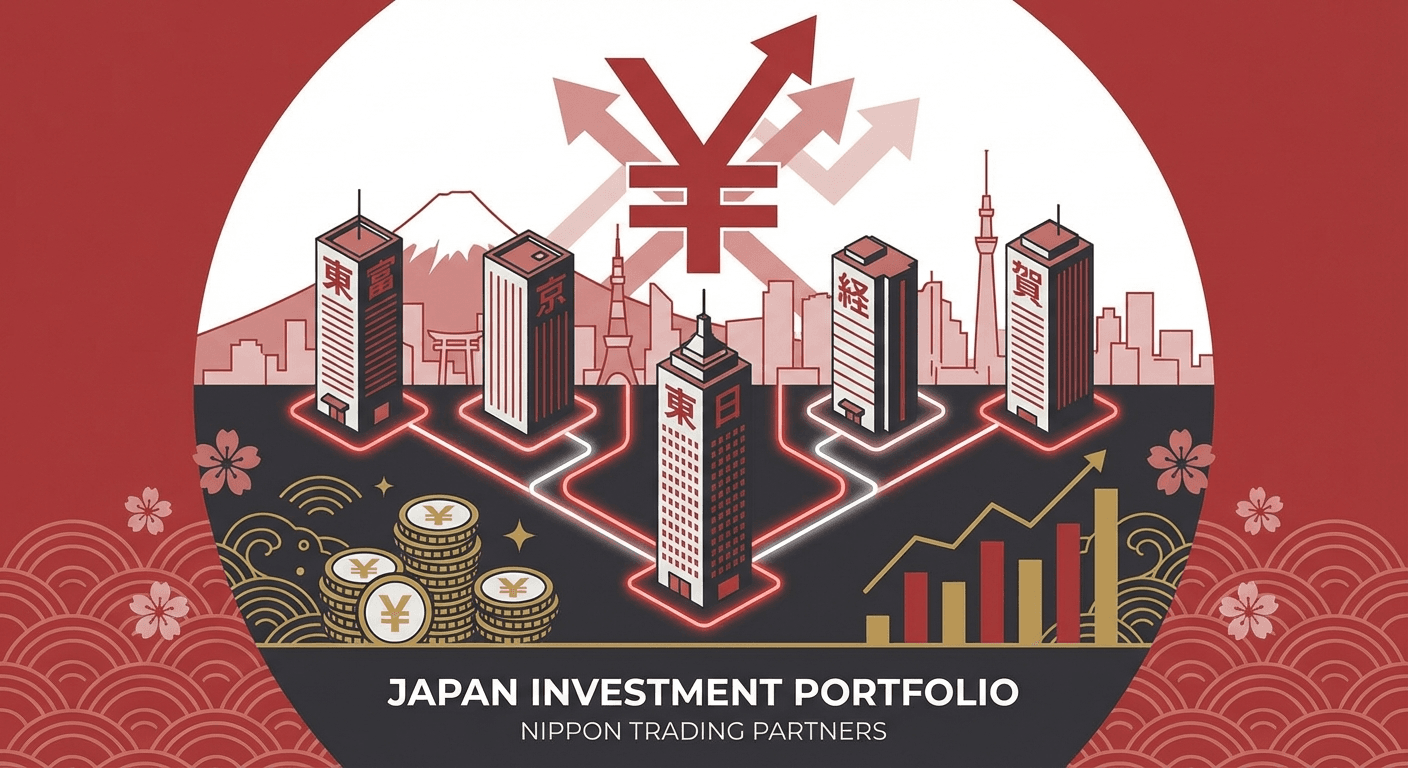
Buffett reveals growing admiration for Berkshire’s investments in five Japanese trading companies: ITOCHU, Marubeni, Mitsubishi, Mitsui, and Sumitomo. First purchased in July 2019 “simply by looking at their financial records and being amazed at the low prices of their stocks,” the position has grown significantly.
At year-end, Berkshire’s aggregate cost was $13.8 billion with a market value of $23.5 billion — a 70% gain. The investment economics are compelling: expected 2025 dividend income of approximately $812 million against yen-denominated debt interest of about $135 million. The companies have agreed to relax the original 10% ownership ceiling, and Buffett signals ownership will “increase somewhat” over time.
Buffett’s praise for these companies is remarkably specific: they increase dividends when appropriate, repurchase shares sensibly, and their top managers are “far less aggressive in their compensation programs than their U.S. counterparts.” This implicit criticism of American executive compensation — from the world’s most successful capitalist — carries particular weight.
The currency strategy is characteristically thoughtful. Berkshire has increased yen-denominated borrowings (all at fixed rates, no floaters) to achieve approximate currency neutrality. This generated $2.3 billion in after-tax gains from dollar strength, including $850 million in 2024 alone. Buffett expects “Greg and his eventual successors will be holding this Japanese position for many decades.”
Make legendary financial documents accessible — turn shareholder letters into interactive experiences.
Equity Portfolio Strategy and Berkshire Cash Position
Buffett addresses what commentators have called an “extraordinary cash position” at Berkshire. Marketable equity holdings declined from $354 billion to $272 billion during 2024, while non-quoted controlled equities increased and remain “far greater” than the marketable portfolio. Despite selling public equities, Buffett emphasizes that “the great majority of your money remains in equities.”
The portfolio philosophy is crystal clear: “Berkshire will never prefer ownership of cash-equivalent assets over the ownership of good businesses, whether controlled or only partially owned.” This statement is followed by a warning about fiat currency: “Paper money can see its value evaporate if fiscal folly prevails” — a rare but pointed macro concern from Buffett.
The household-name holdings at year-end include Apple, American Express, Coca-Cola, and Moody’s. Buffett notes that many of these companies “earn very high returns on the net tangible equity required for their operations” — his preferred metric for business quality. The key insight about Berkshire’s current size is the reduced flexibility: “We can’t come and go on a dime. Sometimes a year or more is required to establish or divest an investment.”
Buffett frames his entire approach to capital allocation within the broader narrative of American capitalism: “The sensible — better yet imaginative — deployment of savings by citizens is required to propel an ever-growing societal output of desired goods and services.” This philosophical grounding, connecting individual investment decisions to national prosperity, is vintage Buffett. For additional perspectives on global financial markets, explore the IMF World Economic Outlook 2025 analysis.
The Pete Liegl Story and Manager Selection Philosophy
The 2024 letter devotes remarkable space to Pete Liegl, the founder of Forest River who died in November at 80. This tribute serves as both memorial and masterclass in Buffett’s approach to acquisitions and talent evaluation.
The acquisition story is characteristically Berkshire: a June 21, 2005 letter from an intermediary, due diligence calls with RV dealers, a June 28 meeting in Omaha with Pete, his wife Sharon, and daughter Lisa. No investment bankers. No lengthy negotiations. When Pete proposed $100,000 annual compensation (because he “wouldn’t want to make more than my boss”) plus 10% of incremental earnings, Buffett “picked myself off the floor” and agreed on the spot.
Buffett uses Pete’s story to reinforce several principles: innate business talent matters more than credentials (“I never look at where a candidate has gone to school. Never!”), one winning decision can make “a breathtaking difference over time,” and the right manager-owner alignment creates extraordinary value. Over 19 years, “Pete shot the lights out. No competitor came close to his performance.”
The underlying message about Berkshire’s acquisition model is clear: find exceptional operators, offer them fair terms and full autonomy, and then stay out of their way. When combined with the observation that “mistakes fade away; winners can forever blossom,” this philosophy explains how Berkshire built a collection of 189 businesses that generated $47.4 billion in operating earnings.
CEO Succession: Greg Abel’s Rising Role
The succession narrative in the 2024 Berkshire Hathaway shareholder letter is more explicit than ever. Buffett writes: “At 94, it won’t be long before Greg Abel replaces me as CEO and will be writing the annual letters.” The Saturday Q&A format has been restructured so that after a 10:30 break, “only Greg will join me on stage” — a clear signal of transition.
Buffett’s endorsement of Abel is comprehensive: Greg “shares the Berkshire creed that a ‘report’ is what a Berkshire CEO annually owes to owners” and “understands that if you start fooling your shareholders, you will soon believe your own baloney and be fooling yourself as well.” These aren’t empty platitudes — they represent the core values that have made Berkshire’s corporate governance the gold standard.
Greg’s Japan engagement is specifically highlighted: he has “met many times” with the five trading companies. His ability to “act” when knee-deep in opportunities is praised alongside Charlie Munger. The utility operation acquisition (increasing ownership from 92% to 100% for $3.9 billion) is attributed to his execution. For Berkshire shareholders evaluating the post-Buffett era, this letter provides the strongest evidence yet that the transition will preserve the company’s culture and approach.
Berkshire Hathaway 60-Year Performance Record
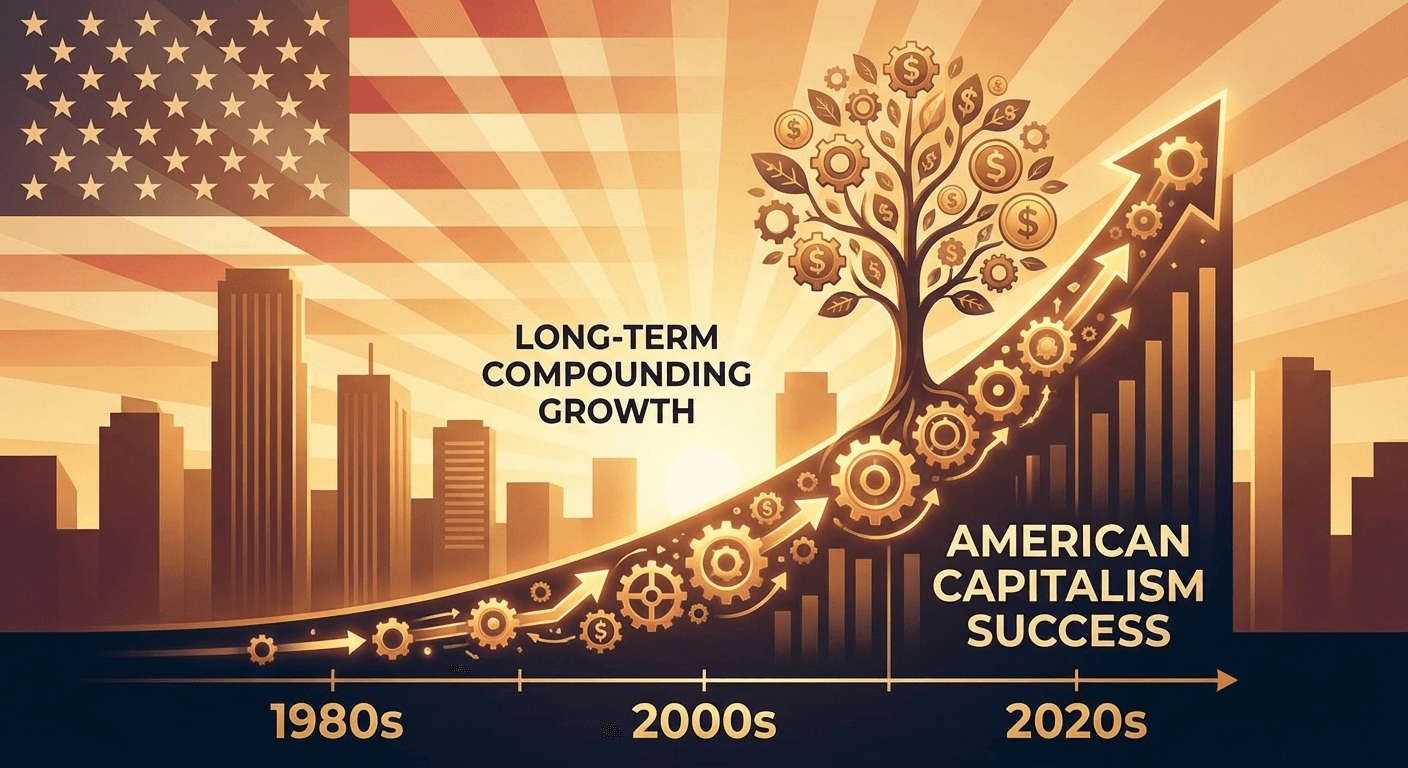
The 2024 letter arrives on the 60th anniversary of Buffett’s management of Berkshire, and the numbers remain breathtaking. The compounded annual gain in per-share market value from 1965-2024 stands at 19.9%, compared to 10.4% for the S&P 500 with dividends included. The overall gain: 5,502,284% versus 39,054% for the index — meaning Berkshire has generated returns 141 times greater than the market.
The 2024 result — 25.5% gain in per-share market value versus 25.0% for the S&P 500 — was characteristically close to the index in a strong market year. But it’s the consistency over six decades that sets Berkshire apart: only a handful of years show significant underperformance, while the compounding effect of avoiding permanent capital loss has created the greatest wealth-building machine in corporate history.
Buffett’s philosophical conclusion ties individual investing to national prosperity: “Berkshire would not have achieved its results in any locale except America whereas America would have been every bit the success it has been if Berkshire had never existed.” This humility, combined with the factual record, makes the case for long-term, equity-focused investing more powerfully than any textbook ever could. For additional resources on investment analysis, explore our a16z State of Crypto 2024 report for alternative asset perspectives.
Frequently Asked Questions
What were the key highlights of Buffett’s 2024 shareholder letter?
The key highlights include $47.4 billion in operating earnings, a record $26.8 billion in federal income taxes (about 5% of all corporate America’s payments), insurance float growing to $171 billion, GEICO’s spectacular turnaround under Todd Combs, increased investments in five Japanese trading companies, and Buffett’s announcement that Greg Abel will soon take over as CEO and letter writer.
How much did Berkshire Hathaway earn in 2024?
Berkshire Hathaway recorded operating earnings of $47.4 billion in 2024, up from $37.4 billion in 2023. Key contributors included insurance underwriting at $9 billion, insurance investment income at $13.7 billion, BNSF railroad at $5 billion, Berkshire Hathaway Energy at $3.7 billion, and other controlled businesses at $13.1 billion. The 60-year compounded annual gain in per-share market value stands at 19.9%.
What did Buffett say about Berkshire’s Japan investments?
Buffett praised the five Japanese trading companies (ITOCHU, Marubeni, Mitsubishi, Mitsui, Sumitomo) for their capital deployment, management quality, and investor-friendly policies. Berkshire’s aggregate cost was $13.8 billion with a market value of $23.5 billion at year-end. Expected 2025 dividend income is $812 million against $135 million in yen-denominated debt interest, and the companies agreed to relax the 10% ownership ceiling.
Why did Berkshire pay record taxes in 2024?
Berkshire paid $26.8 billion in federal income taxes in 2024 — about 5% of all corporate America’s total — because 60 years of continuous reinvestment (with only one dividend ever paid, in 1967) allowed the company to build enormous taxable income. Aggregate federal tax payments from 1965-2024 now exceed $101 billion.
What is Berkshire Hathaway’s insurance float?
Berkshire’s insurance float grew from $46 billion two decades ago to $171 billion in 2024. Float represents premiums received before claims are paid, which Berkshire invests. Over the past two decades, the insurance business generated $32 billion in after-tax underwriting profits (3.3 cents per dollar of sales), making the float essentially cost-free capital.



